
Advice
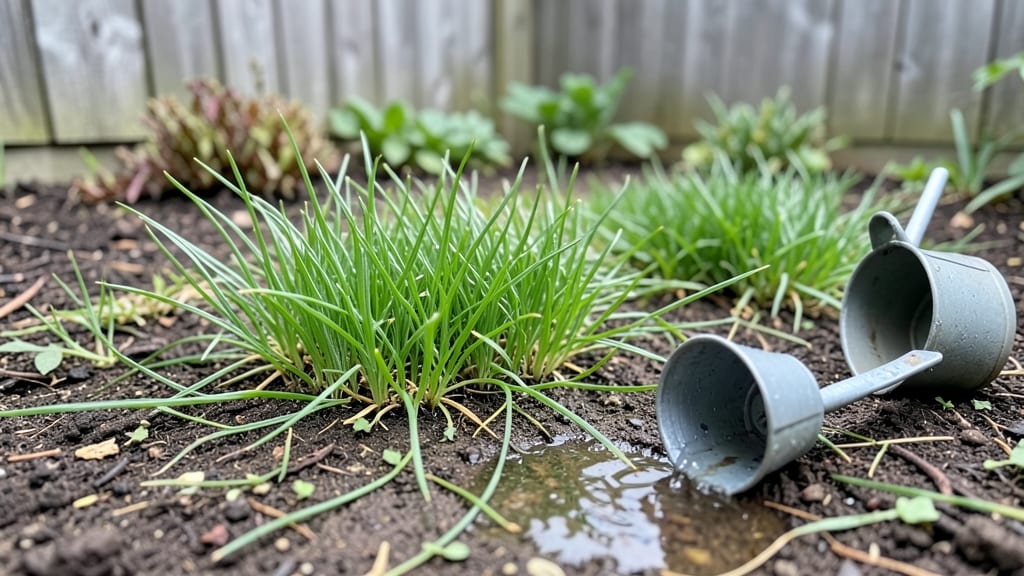
Overwatering grass seed is a common mistake that smothers seeds, encourages mold, and prevents proper germination by drowning out oxygen and leaching away essential nutrients from the soil.
Too much water creates a suffocating environment where seeds can't breathe, leading to rot and fungal infections like Pythium. 🌱 The soil becomes waterlogged, pushing seeds too deep or washing them away entirely.
I've seen entire lawns fail because of this—even after proper planting. The key is keeping the soil consistently moist (like a damp sponge) without turning it into a swamp.
For new grass seed, water lightly 2-3 times daily for the first week, just enough to keep the top inch of soil damp. Once sprouts appear, reduce to 1-2 times daily and let the topsoil dry slightly between waterings.
A simple finger test works best—if the top inch feels dry, it's time to water again.
💡 In This Article
- How Overwatering Affects Grass Seed Germination
- Optimal Watering Schedule for New Grass Seed
How overwatering affects grass seed germination
When you drown grass seeds in water, you're essentially suffocating them. Seeds need oxygen to activate enzymes that break down stored nutrients, kickstart metabolism, and trigger germination. In waterlogged soil, oxygen levels can drop below 5%—far below the 10-20% range seeds require.
This creates anaerobic conditions where harmful bacteria and fungi thrive instead of the beneficial microbes that help seeds establish roots.
The real damage happens at the microscopic level. Grass seeds have tiny pores that absorb water through a process called imbibition.
When submerged for too long, these pores clog with excess water, preventing proper hydration of the embryo inside. 🌱 What's worse, the seed's outer coating can soften and rot, especially in temperatures above 70°F, where microbial activity accelerates.
This is why you'll often see seeds turn mushy or develop a foul odor when overwatered.
Water pressure also plays a destructive role. Heavy watering can bury seeds too deep—more than ¼ inch—where they struggle to reach light and oxygen. Even worse, the force of water can physically dislodge seeds from their planting position, creating uneven germination patterns.
I've seen entire seed trays wash away during downpours, leaving bare spots that never recover.
Fungal diseases like Pythium and Rhizoctonia exploit these conditions. These pathogens thrive in saturated soil, producing spores that infect seeds within 24-48 hours of excessive moisture. The infected seeds either fail to sprout or produce weak, discolored seedlings that collapse soon after emergence.
This is why you might see patches of mold or slimy soil—those are visual warnings that your seeds are drowning.
Another critical factor is nutrient leaching. Water washes away soluble nutrients like nitrogen, phosphorus, and potassium from the soil surface where seeds need them most. A single heavy watering can remove 30-50% of these essential nutrients from the top ½ inch of soil—exactly where young roots are trying to establish.
Without these nutrients, even properly hydrated seeds struggle to develop strong root systems.
What most people don't realize is that the timing of watering matters just as much as the amount. Watering at the wrong time—like late in the day—can leave seeds sitting in moisture overnight, creating the perfect conditions for fungal growth.
The ideal approach is to water in the morning so any excess moisture evaporates during the day, keeping the soil environment balanced. 💫