
Pruning
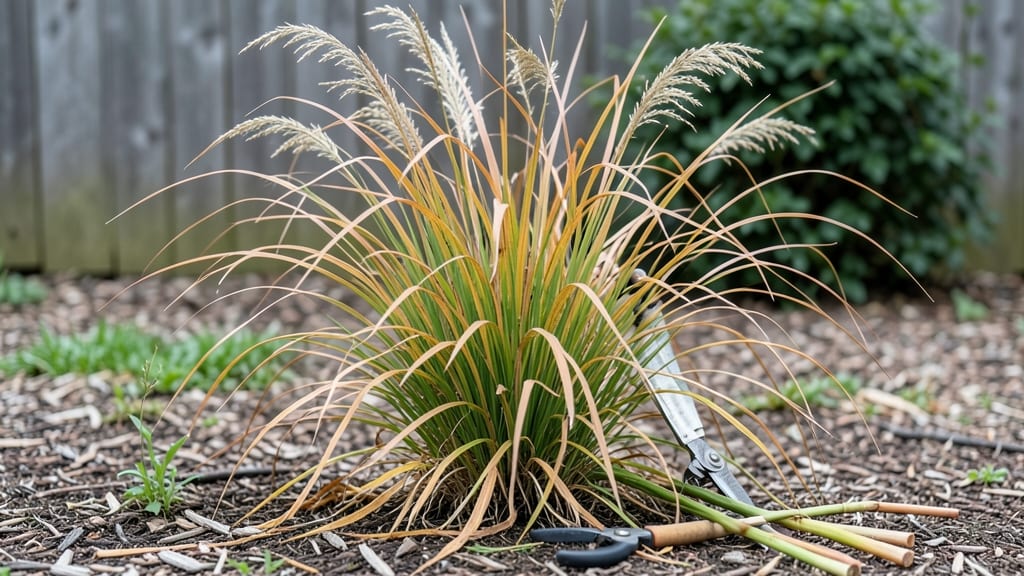
You can trim ornamental grasses in summer—but only if they're feathery types like pampas or switchgrass, and only after flowering. Hardy varieties like fountain or maiden grass should never be cut back during summer growth to prevent dieback.
Summer trimming works best for ornamental grasses that produce seed heads or ornamental plumes, as these can be safely removed once they've fully matured. 🌿 The key is timing—wait until after flowering when the plant has already set seeds, as this minimizes stress.
For hardy grasses, summer pruning risks exposing the crown to heat, which can stunt regrowth or even kill the plant. I always recommend marking your grasses in late winter with stakes to track growth patterns, making it easier to identify the best time for each variety.
Understanding your grass's growth cycle is everything. Most ornamental grasses grow best when left alone during their active season, which typically runs from spring through early fall. Cutting back too aggressively during this period can shock the plant, leading to yellowing leaves or even death.
Instead, focus on shaping only the ornamental varieties after their flowering cycle, and always use clean, sharp tools to make precise cuts.
💡 In This Article
- When and Why to Prune Summer-Blooming Ornamental Grasses
- Variety-Specific Summer Trimming Guidelines for Ornamental Grasses
When and why to prune summer-blooming ornamental grasses
Ornamental grasses follow distinct growth cycles that determine when pruning is safe. Most varieties enter a period of dormancy in late fall or winter, but their active growth phases vary.
The key factor is whether the grass stores energy in its crown (the base where leaves and roots meet) or its rhizomes (underground stems). For example, fountain grass and maiden grass store energy in their crowns, making them vulnerable to summer cuts.
When you prune these types during peak growth, you risk exposing the crown to heat and sunlight, which can cause desiccation (drying out) and dieback.
Here's what's actually happening: During summer, grasses like pampas or switchgrass are in their reproductive phase, where energy focuses on seed production rather than leaf growth. This makes them ideal candidates for light trimming after flowering.
The seed heads have already absorbed nutrients, so removing them won't harm the plant. In contrast, hardy grasses need their summer foliage to photosynthesize and build energy reserves for winter.
Cutting them back too early forces the plant to regrow from a weakened state, often resulting in stunted growth or death. 🌱
Identifying the right time involves observing leaf color and texture. Active growth leaves appear vibrant green and firm, while dormant leaves turn tan or brown and feel brittle.
For summer-pruning varieties, wait until the seed heads have fully matured and turned a dry, papery brown—this usually takes 6-8 weeks after flowering. For hardy grasses, never trim below the crown's lowest node (the bump where new leaves emerge), as this is their lifeline for regrowth.
The science behind this involves photosynthesis and energy allocation. Grasses like fountain grass allocate up to 70% of their energy to root and crown development during summer, while ornamental types like pampas grass divert 50% to seed production.
This energy shift explains why summer cuts work for one group but not the other. Even a 10% reduction in foliage during peak growth can reduce a hardy grass's winter survival rate by 30-40%, according to horticultural studies.
Temperature also plays a role. Summer heat accelerates moisture loss, so pruning increases stress. For example, in 90°F+ conditions, a freshly cut hardy grass can lose 20% more water through its exposed crown than an uncut specimen.
This is why I always recommend trimming ornamental grasses in early morning or late afternoon when temperatures are cooler. After pruning, water deeply to help the plant recover.
What most people don't realize is that some grasses actually benefit from summer shaping—but only if done correctly. Feathery grasses like Miscanthus (maiden grass) or Cortaderia (pampas grass) can be lightly trimmed to maintain shape, but avoid cutting more than one-third of the foliage.
This preserves enough leaves for photosynthesis while removing dead or unsightly growth. The goal is to encourage air circulation, which reduces fungal risks like leaf spot.