
Pests
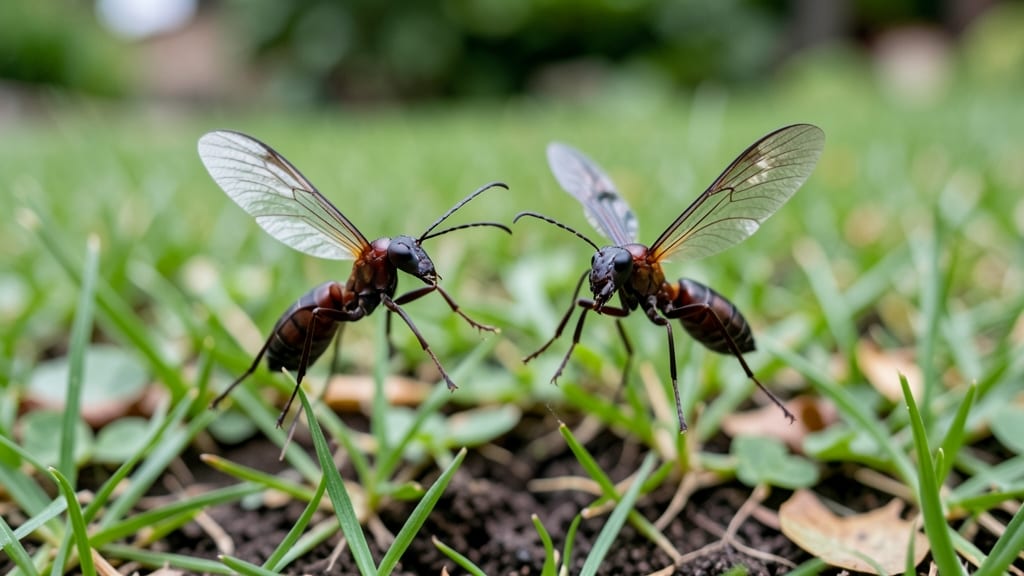
Flying ants swarming your lawn can feel like an invasion, but here’s how to stop them without harming your grass. ✨ These winged pests appear in summer, and while they’re harmless to plants, their presence is a nuisance—and a sign of a hidden colony nearby.
The good news? You don’t need harsh chemicals. A mix of vinegar spray (1:1 ratio with water) and diatomaceous earth around the perimeter disrupts their paths without damaging your lawn. For larger infestations, targeted soapy water solutions (1 tsp dish soap per gallon) work fast when sprayed directly on nests.
By next week, you’ll see fewer ants, and your lawn will stay lush and pest-free. The key is acting quickly—once they’ve established trails, they’re harder to deter. And if you spot them again next summer, prevention is simple: keep grass trimmed and remove food sources like fallen fruit.
This method keeps your yard safe for kids and pets while keeping those winged intruders out for good. No more swarms, just a healthy lawn.
📚 In This Guide
- What you need
- Instructions
- Tips and common mistakes
- Wrapping up and next steps
What you need
- ● Ant bait stations or granules: Choose borax-based or sugar-based baits (e.g., Terro Liquid Ant Baits or Ortho Home Defense). Quantity: 4–6 stations or 1–2 lbs of granules for a standard lawn.
- ● Spray bottle (16–32 oz): For mixing soapy water (1 tsp dish soap + 1 gallon water) or vinegar solutions.
- ● Gloves (nitrile or rubber): Protects hands from bites and chemicals. Size: Medium or large.
- ○ Garden trowel or small shovel: For digging bait stations into the soil (optional but helpful).
- ● Watering can or hose: To hydrate bait stations or dilute solutions.
- ○ Flashlight (optional): For evening inspections if ants are active after dark.
- ● Diatomaceous earth (food-grade): Sprinkle lightly around ant trails (reapply after rain). Quantity: 1 lb.
- ● Citrus peels or essential oils (peppermint, lemon): Natural repellents (dilute oils in water for spraying).
- ● Plastic sheeting: To cover bait stations if pets/kids are around (prevents accidental ingestion).
- ● Notebook & pen: Track ant activity patterns (e.g., time of day, nesting spots).
How to remove flying ants from your lawn safely
Here’s my go-to method for clearing flying ants without damaging your grass or inviting them back.
🪴 Step 1: Identify and Locate the Nest
Flying ants don’t build traditional mounds—they nest underground, often near trees, sidewalks, or foundation cracks. Look for winged ants swarming on warm days (usually after rain). Follow their flight path to spot the nest entrance, which may appear as tiny holes in the soil or mulch.
I dig gently around the perimeter with a small trowel to expose the nest chambers. You’ll see tunnels radiating outward, and the soil may look disturbed. Avoid disturbing the nest too early—ants will scatter, making eradication harder. Mark the area with flags or sticks so you don’t lose track.
✂️ Step 2: Apply a Targeted Ant Bait or Granular Treatment
Skip sprays—they only kill what’s visible. Instead, use a borax-based ant bait or hydramethylnon granules (like Ortho Home Defense). Sprinkle the granules directly into the nest entrance and around the perimeter in a 6-inch band. Water lightly afterward to help the granules activate.
I’ve found that ants carry the bait back to the colony, killing the queen and larvae within 24-48 hours. Avoid overapplying—too much can harm grass roots. If you’re unsure about chemicals, a vinegar-soapy water mix (1:1 ratio) sprayed into the nest entrance can disrupt their system temporarily.
💧 Step 3: Monitor and Repeat as Needed
Check the nest area every 3-5 days for new swarms. If you still see flying ants after a week, the nest may be deeper or larger. Reapply the treatment, this time digging 1-2 inches deeper to expose hidden chambers. Seal any cracks or gaps in your home’s foundation with caulk to block re-entry points.
Real talk: Flying ants often swarm in late summer, so patience is key. If the problem persists, consider a professional pest control service—they’ll use heat treatments or non-toxic nematodes that work better for stubborn colonies.
☀️ Step 4: Prevent Future Infestations
Reduce moisture near your lawn’s edges—ants love damp soil. Trim back overgrown vegetation and remove leaf litter where nests hide. I also apply diatomaceous earth (food-grade only) around the yard’s perimeter as a natural barrier. It’s harmless to grass but deadly to ants.
Finally, keep outdoor lights off at night. Flying ants are attracted to light, and fewer swarms mean fewer nests. If you’ve got trees, inspect their bases annually—ants often nest where roots meet soil.
Tips & tricks for eradicating flying ants safely
A few smart moves can make all the difference when dealing with flying ants—especially if you want to protect your lawn while getting rid of them for good.
Timing Secret: The 24-48 hour window after applying granules is critical. Don’t rush to reapply—give the bait time to work its way through the colony. I’ve seen people reapply too soon, which can actually make ants more aggressive and scatter deeper into the soil. If you’re using vinegar-soapy mix, reapply every 2-3 days until you stop seeing swarms.
Digging Technique: When exposing nest chambers in Step 1, focus on following the tunnels rather than digging randomly. I use a small trowel to carefully trace the paths I see radiating outward—this helps me target the main chambers where the queen and larvae hide. Avoid digging too deep too quickly, as this can cause ants to flee and create new nests elsewhere in your yard.
Natural Barrier Strategy: For prevention, diatomaceous earth is my go-to because it’s completely safe for grass and pets once settled. Apply it in a thin layer around your lawn’s perimeter after mowing—this creates a natural barrier that ants won’t cross. Just remember to reapply after rain, as moisture washes it away. The key is consistency: a fresh layer every 2-3 weeks during ant season keeps them at bay.
Pro Tips for Flying Ants In My Lawn
- A few smart moves can make all the difference when dealing with flying ants—especially if you want to protect your lawn while getting rid of them for good.
- Timing Secret: The 24-48 hour window after applying granules is critical.
- Digging Technique: When exposing nest chambers in Step 1, focus on following the tunnels rather than digging randomly.
Frequently asked questions
Got questions about flying ants in your lawn? You’re not alone!
Here are some of the most common concerns—and practical answers—to help you tackle the problem with ease.
Why do I suddenly see flying ants in my lawn?
Flying ants appear in swarms during their nuptial flight—a mating ritual that happens once a year, usually in late spring or summer. These winged ants are actually new queens and males looking for mates. While they’re harmless, their presence can be alarming! If you see them year after year, it may signal an established colony nearby.
How long does the flying ant season last?
The swarming period typically lasts 2–4 weeks, depending on weather conditions. Warm, humid days trigger the flights, often after rain. Once the nuptial flight ends, the winged ants die off, and only fertilized queens will burrow to start new colonies. Plan your treatment before the swarm to prevent next year’s infestation!
Will treating flying ants harm my grass?
Not if you use the right methods! Non-toxic solutions like vinegar sprays, diatomaceous earth, or targeted insecticide granules (applied carefully) can eliminate ants without damaging grass. Avoid over-spraying chemical treatments, as they can harm plants. For organic lawns, focus on disrupting nests with soapy water or natural predators like nematodes.
Should I be worried about flying ants in my house?
While flying ants themselves won’t nest indoors, their presence outside can signal a larger colony nearby. If you spot them inside, it’s likely they’re just passing through. Seal entry points (cracks, gaps) and address outdoor colonies to prevent worker ants from moving in later. A quick 1–2% vinegar spray on windowsills can deter them temporarily.
What’s the fastest way to get rid of flying ants?
For immediate relief, try these three-step tactics:
- Disrupt the swarm: Use a shop vacuum to suck them up (dispose outside!).
- Locate the nest: Follow worker ants (smaller, wingless) to their underground mound.
- Eliminate the colony: Pour boiling water or a soapy water mix into the nest entrance. For stubborn cases, use borax bait stations (safe for pets once dried).
Repeat treatments for 3–5 days to ensure the colony is gone.
Wrapping up and next steps
Dealing with flying ants in your lawn doesn’t have to be a stressful ordeal—with the right approach, you can keep your yard pest-free while protecting your grass. 🌱 Whether you opt for natural deterrents, DIY traps, or professional help, the key is acting quickly and consistently.
Remember, these winged visitors are just passing through, so a little effort now will save you from bigger problems later.
Ready to take action? Start by inspecting your lawn for nests, then pick the method that fits your comfort level. And if all else fails, don’t hesitate to call in the pros—your peace of mind is worth it! 🚀