
Mower
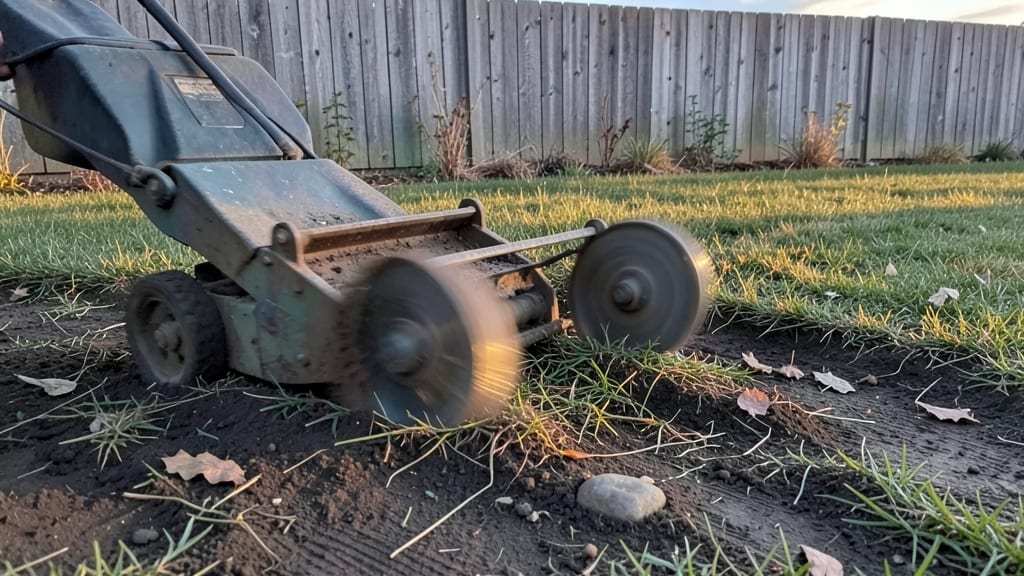
Understanding blade speed is key to choosing the right mower for your needs. 🔥 Residential models prioritize balance—enough power for clean cuts without excessive wear or fuel use. Commercial-grade mowers, though, crank up the RPM to handle tougher grasses and larger areas efficiently.
I’ve noticed that zero-turn mowers, with their sharper turns and tighter cutting paths, often need those higher speeds to maintain precision while maneuvering. The trade-off? Faster blades mean quicker wear, so maintenance becomes just as critical as choosing the right RPM.
Blade speed also affects how your lawn looks and feels. Slower blades (around 2,900 RPM) create finer cuts, ideal for delicate grasses like fescue, while faster blades (over 4,000 RPM) tear through tougher grasses like Bermuda with ease.
For hilly terrain or thick grass, those extra RPMs can make all the difference in getting a clean pass without clogging the deck. Just remember—higher speeds mean more noise and vibration, so ear protection and steady hands are a must!
💡 In This Article
- Lawn Mower Blade RPM by Engine Type and Power
- Optimizing Blade Speed for Grass Type and Cutting Conditions
Lawn mower blade RPM by engine type and power
Here's what actually happens under the hood when you pull the starter: The engine's power output directly determines blade speed, measured in revolutions per minute (RPM).
Gasoline-powered mowers with 5-10 horsepower (HP) engines typically operate between 2,900-3,200 RPM, while those with 15-25 HP engines can push blades to 3,500-4,000 RPM.
Electric mowers, on the other hand, usually max out around 3,000 RPM due to motor limitations, though high-end cordless models with brushless motors can approach 3,500 RPM. The key factor is torque—the twisting force that drives the blade—where gasoline engines excel with their combustion power.
Commercial-grade mowers with 25+ HP engines often exceed 4,000 RPM, sometimes reaching 4,500 RPM for heavy-duty cutting. These machines use larger, more robust engines designed to handle prolonged operation under load.
For example, a 25 HP commercial mower might spin its 42-inch blade at 3,800 RPM, while a 40 HP zero-turn mower could push a 60-inch blade to 4,200 RPM for precision trimming. The trade-off?
Higher RPMs increase fuel consumption and blade wear, which is why commercial operators balance speed with maintenance schedules. 🔥
What most people don't realize is how blade speed correlates with cutting efficiency. Slower blades (2,900-3,200 RPM) create cleaner, finer cuts ideal for delicate grasses like Kentucky bluegrass, while faster blades (> 4,000 RPM) tear through tougher grasses like Bermuda with less resistance.
The science involves centrifugal force: Faster blades generate more force per revolution, reducing the time needed to sever grass stems. However, this comes at the cost of increased vibration and noise—commercial mowers often exceed 90 decibels, requiring ear protection for operators.
Fuel consumption is another critical factor tied to RPM. A 15 HP mower running at 3,200 RPM might burn 0.5 gallons per hour, while a 40 HP zero-turn mower at 4,200 RPM could consume 1.2 gallons per hour.
The relationship is nearly linear: Every 500 RPM increase typically adds 10-15% more fuel use. This is why residential users often opt for slower, more fuel-efficient blades unless dealing with dense or coarse grasses.
Blade wear also accelerates with speed—higher RPMs increase friction between the blade and grass, shortening the time between sharpenings.
Zero-turn mowers present a unique case. Their independent rear wheels allow for tighter turns, but the blades must spin faster to maintain cutting efficiency during sharp pivots. A 60-inch blade on a zero-turn mower might operate at 4,000-4,500 RPM to compensate for the reduced contact time per pass.
This design prioritizes maneuverability over fuel economy, which is why these mowers are reserved for large properties or professional landscapers. The faster blades also require more frequent sharpening—every 10-15 hours of use compared to 20-30 hours for residential models.
For residential users, the choice often comes down to lawn size and grass type. A 15 HP mower with a 3,200 RPM blade is perfect for 1/2-acre lawns with moderate grass density, while a 20 HP model at 3,800 RPM handles 1-2 acres or tougher grasses like Zoysia.
Electric mowers, limited to 3,000 RPM, are best for small, flat lawns with fine grasses. The right RPM ensures clean cuts without unnecessary wear or fuel waste—balancing performance with practicality. ✨