
Diseases
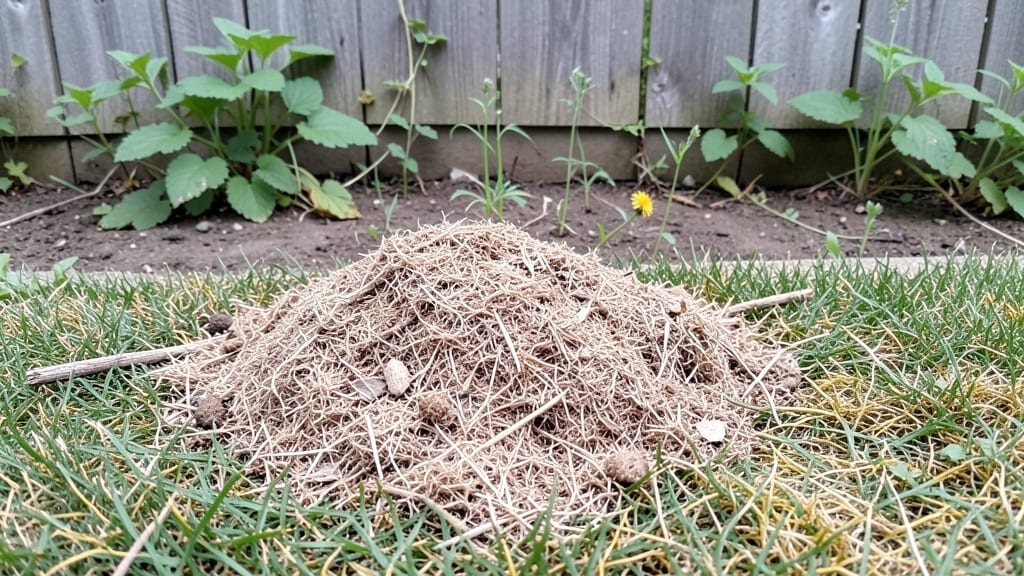
Using sawdust on grass can actually harm your lawn over time. The rapid decomposition steals essential nitrogen from the soil, leaving your grass nutrient-starved and weak. 🌱 Plus, the fine particles pack tightly, blocking air and water from reaching roots—a recipe for suffocation.
I’ve seen firsthand how sawdust turns a lush lawn into a patchy mess within weeks, especially in hot climates where moisture evaporates fast. The acidity it produces also disrupts beneficial soil microbes, creating an imbalance that’s hard to reverse.
💡 In This Article
- How Sawdust Affects Grass and Soil Chemistry
- Best Organic Mulches for Grass and Lawn Health
How sawdust affects grass and soil chemistry
When sawdust breaks down in soil, it triggers a rapid decomposition process that creates what scientists call a "nitrogen sink." This happens because microbes consume the fine particles quickly, using up available nitrogen to metabolize the carbon-rich material.
For every 10 parts of carbon in sawdust, microbes need about 1 part nitrogen to break it down—if your soil doesn't have enough, your grass gets starved of this essential nutrient. 🌱 This nitrogen depletion often shows up as yellowing grass blades within 2-4 weeks of application, especially in sandy soils where nutrients leach away faster.
The physical texture of sawdust makes matters worse. Unlike chunkier mulches, sawdust particles are 0.1-0.5 millimeters in size—so fine they pack tightly when moist, creating a dense mat that blocks oxygen and water from reaching grass roots.
This suffocation effect is compounded by sawdust's tendency to form a crust when dry, further restricting root growth. The compacted layer also reduces soil aeration by up to 40%, which is why lawns treated with sawdust often develop shallow root systems that can't withstand drought or heavy foot traffic.
Chemically, sawdust lowers soil pH by releasing organic acids as it decomposes. While some plants thrive in acidic conditions, most common grasses prefer a neutral pH of 6.0-7.0. Sawdust can push soil pH down to 5.0 or lower within months, creating an environment where beneficial microbes struggle to survive.
This microbial disruption weakens the soil's natural ability to retain moisture and nutrients—another reason sawdust-treated lawns often require more frequent watering and fertilization. 💫
Compare this to natural mulches like straw or bark, which break down more slowly and improve soil structure. Straw, for example, has a carbon-to-nitrogen ratio of about 80:1, while sawdust can exceed 500:1.
This extreme imbalance means sawdust creates a "hungry" soil environment that drains nitrogen reserves, whereas straw releases nutrients gradually as it decomposes. Even pine straw—another common mulch—has a 40:1 ratio and adds beneficial organic matter without the compacting effect of sawdust.
What most gardeners don't realize is how sawdust's acidity affects soil chemistry over time. The pH drop isn't just about numbers—it alters the availability of essential minerals like phosphorus and potassium.
Grass roots become less efficient at absorbing these nutrients when soil pH falls below 5.5, leading to stunted growth and increased susceptibility to diseases like brown patch or dollar spot.
The visual difference between sawdust-treated lawns and those with proper mulch is striking: one becomes patchy and weak, while the other remains vibrant and resilient. 🌿
For a practical comparison, consider this: A 2-inch layer of sawdust (about 10 pounds per 100 square feet) will rob your soil of roughly 0.5 pounds of nitrogen as it decomposes—enough to feed 100 square feet of lawn for about 2 weeks at normal growth rates.
That's why professional horticulturists recommend avoiding sawdust entirely for lawns, instead opting for 3-inch layers of composted wood chips or 2-inch layers of straw, which provide similar moisture retention without the chemical drawbacks.