
Mower
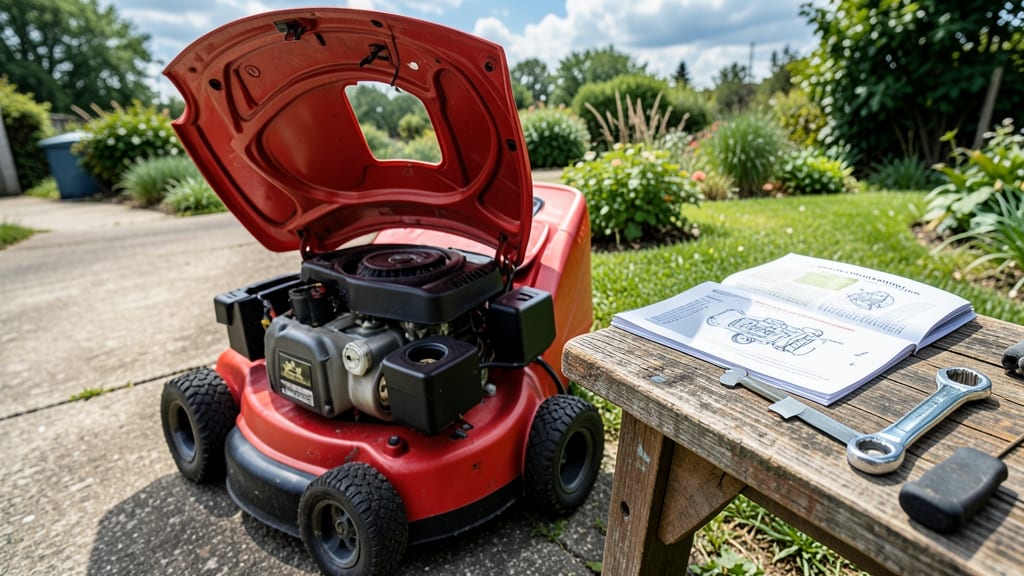
To set the proper lawn mower spark plug gap, aim for 0.025 to 0.035 inches (0.6 to 0.9 mm), as specified in your mower's manual. Too wide a gap causes misfires and poor performance, while too narrow leads to fouling and engine strain. Always use a spark plug gap tool for precision adjustments.
The right spark plug gap ensures your mower's engine runs smoothly and efficiently. 🔥 This small but critical measurement affects combustion—too wide gaps create weak sparks that fail to ignite fuel properly, while gaps that are too narrow restrict airflow, causing carbon buildup on the plug.
Many modern mowers use plugs with pre-set gaps, but wear from use often requires adjustments every 25-50 hours of operation. I always recommend checking gaps during seasonal tune-ups, as even small deviations can lead to noticeable performance drops over time.
For accurate adjustments, never rely on guesswork—always use a feeler gauge to verify measurements. A common mistake is bending the electrode during adjustment, which throws off the gap entirely. If you notice your mower struggling to start, running rough, or stalling frequently, the spark plug gap could be the culprit.
Brands like NGK and Bosch offer durable plugs designed for small engines, but their gap specifications vary slightly, so always double-check your manual before making adjustments.
💡 In This Article
- How to Measure and Adjust a Lawn Mower Spark Plug Gap
- Common Spark Plug Gap Mistakes and Their Fixes
How to measure and adjust a lawn mower spark plug gap
First, you'll need a feeler gauge—those thin metal strips with precise measurements marked on them. Slide the gauge between the plug's center electrode and the ground electrode (the metal part it connects to). The gap should match your mower's specifications, typically between 0.025 and 0.035 inches.
If the gauge fits snugly without wiggling, you've got the right measurement. If it slides in too easily, the gap is too wide; if it's a tight squeeze, it's too narrow. 🔧
Adjusting the gap requires patience and the right tools. Use a small pair of needle-nose pliers to gently bend the ground electrode—never the center electrode, as this can damage the plug's firing tip. For wider gaps, bend the ground electrode outward; for narrower gaps, bend it inward.
Apply even pressure to avoid bending the electrode at an angle, which creates inconsistent gaps across different sections. A magnifying glass helps verify straight alignment after adjustment.
Safety is critical when handling spark plugs. Always disconnect the spark plug wire before removing the plug from the engine to prevent accidental firing. Ground the plug on a metal surface or your mower's engine block while working to avoid static electricity buildup, which can cause misfires.
Wipe the plug clean with a dry cloth before measuring—oil or debris can throw off your readings. Pro tip: Store your feeler gauge in a dry place to prevent rust, which can alter its precision over time.
Most lawn mower engines use resistor-tip plugs (marked with an "R" or "I") to reduce radio interference. These require slightly wider gaps—typically 0.035 inches—compared to standard plugs. If your mower uses a different type, like copper-core plugs for cold climates, the gap might vary.
Always check your owner's manual for model-specific recommendations, as some high-performance engines need 0.030 inches for optimal combustion.
What happens if you get the gap wrong? A gap that's too wide creates a weak spark that struggles to ignite the air-fuel mixture, causing misfires and rough idling. Too narrow a gap leads to carbon buildup on the plug's tip, which insulates the spark and causes fouling.
In extreme cases, this can damage your mower's ignition system. Regular checks every 25-50 hours of use help maintain performance, especially for mowers used frequently in humid conditions where corrosion is more likely.
For visual learners, imagine the spark plug gap like the space between your thumb and index finger when you hold them just barely apart—about 1/4 inch total, but the actual gap we're measuring is much smaller.
This tiny space allows the spark to jump across while preventing excessive wear on the electrodes. When in doubt, consult a small-engine specialist—they often have digital gap tools that provide instant readings for extra precision.