
Mower
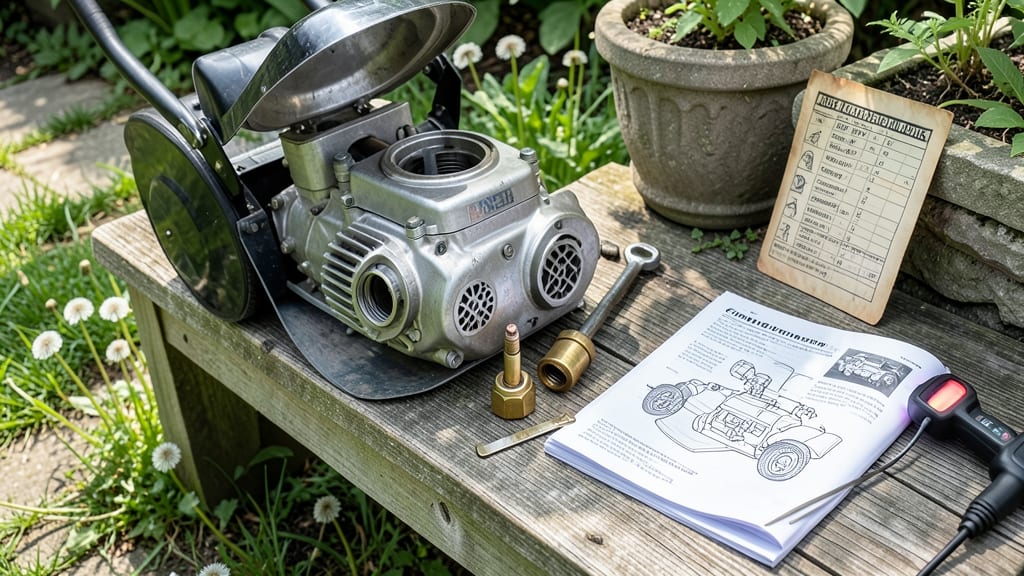
To find your lawn mower spark plug size, check the manufacturer's manual or engine label for the exact fitment (like NGK BP6ES or Champion C7Y). If missing, measure the gap and thread diameter to identify a universal replacement.
Most people don't realize how critical the spark plug size is to your mower's performance—using the wrong one can cause misfires or even engine damage. 🔥 The size isn't just about fitting snugly; it's about matching the engine's compression ratio and ignition timing.
For example, a 4-cycle engine typically needs a different plug than a 2-cycle, even if the thread size looks similar.
I always recommend starting with the manufacturer's specs, but when those aren't available, measuring the gap (usually between .025" and .035") and thread diameter (commonly 10mm or 14mm) gives you the key details for a proper match.
Here's a pro tip: if you're dealing with an older model, the engine label might be faded or missing entirely. In that case, look for the model number on the mower's frame—this often unlocks the exact plug size in online brand databases.
Many common brands like Husqvarna or Toro reuse the same plug across multiple models, but always double-check before purchasing. The reach (how far the plug threads into the engine) is just as important as the gap measurement—too long, and you'll strip the threads.
💡 In This Article
- How Spark Plug Sizes Match Lawn Mower Engine Types
- Brand-Specific Lawn Mower Spark Plug Size Chart by Model
How spark plug sizes match lawn mower engine types
The spark plug size you need depends directly on your mower's engine displacement (measured in cubic centimeters or "cc") and whether it's a 2-cycle or 4-cycle system.
For example, a 125cc engine typically uses a 10mm thread size plug with a .025" gap, while a 208cc engine often requires a 14mm plug with a .030" gap. The reason lies in compression ratios—higher displacement engines generate more heat, requiring a wider gap to prevent fouling.
Think of it like a car's spark plug: a high-performance engine needs a hotter plug to ignite the fuel-air mixture efficiently.
Another critical factor is the plug's reach—the length of the threaded portion that screws into the engine. A 1/2" reach plug fits most small engines (125cc-160cc), while 3/4" or 1" reach plugs accommodate larger engines (208cc+).
Using the wrong reach can strip threads or leave the plug loose, causing misfires. For instance, a Husqvarna TS 125 uses a NGK BP6ES (10mm, .025" gap, 1/2" reach), but the same brand's TS 208 requires a NGK BPMR7A (14mm, .030" gap, 3/4" reach).
The thread size alone isn't enough—reach and gap matter just as much!
Many DIYers assume "universal" plugs work across brands, but this is a common misconception. While brands like NGK or Champion offer plug cross-references, the fit isn't always perfect.
For example, a Toro 20342 (160cc) needs a Champion C7Y, but swapping in a NGK BP6ES (common for Husqvarna) might not seat properly due to slight differences in thread pitch or reach.
Always verify the exact part number from your manual or engine label—this ensures the plug's heat range matches your engine's operating conditions.
Here's what happens when you get it wrong: A plug with too small a gap (.020") can cause carbon buildup, while one with too large a gap (.040") may fail to ignite the fuel.
The thread size affects how securely the plug fits—10mm plugs are standard for smaller engines, but 14mm or 18mm are needed for larger commercial-grade mowers. Even the wrong reach can lead to oil leaks or thread stripping, turning a simple maintenance task into a costly repair. 🔧
Pro tip: If you're measuring the gap yourself, use a feeler gauge for precision. The gap should be adjusted to the manufacturer's spec—usually .025" to .035" for most lawn mowers. Too tight, and the plug won't fire properly; too wide, and it'll misfire or damage the ignition coil.
The thread diameter is equally critical: 10mm is common for residential mowers, while 14mm or 18mm are typical for commercial or zero-turn models. Always double-check before purchasing!
For visual learners, imagine the plug like a key fitting a lock—the wrong size won't turn, and forcing it can break the mechanism. The same applies here: a 10mm plug won't thread into a 14mm hole, and a 1/2" reach plug won't seat properly in a deeper well.
Pay attention to these details, and your mower will run smoother with fewer headaches. 💫