
Advice
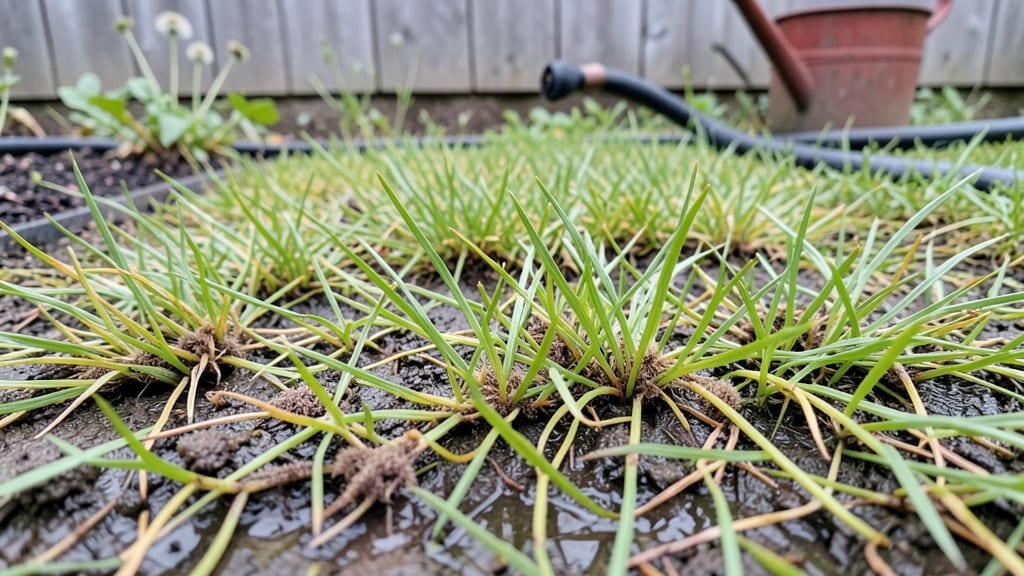
Overwatered grass can recover if caught early, but severe damage may require weeks or even months of proper drainage, reduced watering, and aeration to revive roots and restore health. Yellowing, spongy turf, and fungal growth are key warning signs.
Your lawn's ability to bounce back depends on how quickly you address the problem.
When grass sits in waterlogged soil, roots suffocate from lack of oxygen, while excess moisture creates the perfect breeding ground for fungal diseases like brown patch or dollar spot. 🌱 I've seen lawns recover beautifully after just a few weeks of proper care, but chronic overwatering can leave permanent damage—especially if the thatch layer becomes compacted.
The good news? Even severely stressed grass can often regain its vibrancy with the right approach to soil aeration and water management.
Here's what I've learned from years of garden journaling: The first 48 hours after noticing overwatering symptoms are critical. That's when roots are still viable but struggling. After that window closes, recovery becomes a slower process that might take months to see full results.
What's interesting is how seasonal timing affects recovery—spring and fall provide ideal conditions with moderate temperatures and natural rainfall patterns that help the grass rebound faster than during summer's heat stress.
💡 In This Article
- How Overwatering Damages Grass Roots and Soil
- Step-by-Step Guide to Reviving Overwatered Lawns
How overwatering damages grass roots and soil
When grass receives too much water, the soil becomes saturated, creating an oxygen-deprived environment that suffocates roots. Grass roots need oxygen to respire and absorb nutrients - when soil pores fill with water instead of air, roots essentially drown.
This process begins within 24-48 hours of excessive watering, where root tips start dying back due to lack of oxygen diffusion. The damage compounds quickly because saturated soil also prevents beneficial microbes from breaking down organic matter, which further reduces nutrient availability for struggling roots.
Saturated conditions create the perfect breeding ground for pathogenic fungi like Rhizoctonia (brown patch) or Sclerotinia (dollar spot). These fungi thrive in moisture levels above 40% soil water content, producing spores that infect grass blades and crowns.
The fungal hyphae then compete with grass roots for limited oxygen and nutrients, accelerating turf decline. You'll often notice a musty odor from these fungal colonies, along with the characteristic grayish-brown lesions that appear on blades during active infection cycles.
The chemical impact extends beyond oxygen deprivation. Excess water leaches essential nutrients like nitrogen, phosphorus, and potassium from the root zone, while also washing away soil microbes that help decompose organic matter.
Soil pH can shift toward alkalinity as water dissolves and removes calcium and magnesium faster than they can replenish, creating another stress factor for grass roots already struggling for oxygen.
What's particularly damaging is how waterlogged soil compacts over time, reducing pore space by up to 30% in heavy clay soils, which makes recovery even more difficult.
Here's what happens at the cellular level: Grass root cells contain specialized tissues called aerenchyma that transport oxygen to submerged root zones.
When soil remains saturated beyond 72 hours, these oxygen transport systems become overwhelmed, leading to anaerobic conditions where roots produce ethanol as a byproduct - similar to fermentation in plants.
This toxic buildup further damages cell membranes, making roots more susceptible to disease and reducing their ability to absorb water and nutrients even when conditions improve.
The most critical damage occurs to the root crown - the transition zone between above-ground blades and below-ground roots. When this area rots from prolonged waterlogging, the entire plant loses its structural integrity.
What's surprising is how quickly grass can appear healthy on the surface while its root system is completely compromised. I've seen lawns where the blades looked green but pulled up easily like weeds because the roots had decomposed from chronic overwatering.
What most people don't realize is how this damage affects the soil's long-term health. Overwatered lawns develop thatch layers that can grow up to 1 inch thick, creating a dense mat that blocks water and air movement.
This thatch buildup becomes a self-perpetuating problem because it traps moisture against the soil surface, creating the perfect conditions for fungal growth and root suffocation to continue even after you stop overwatering.