
Planting
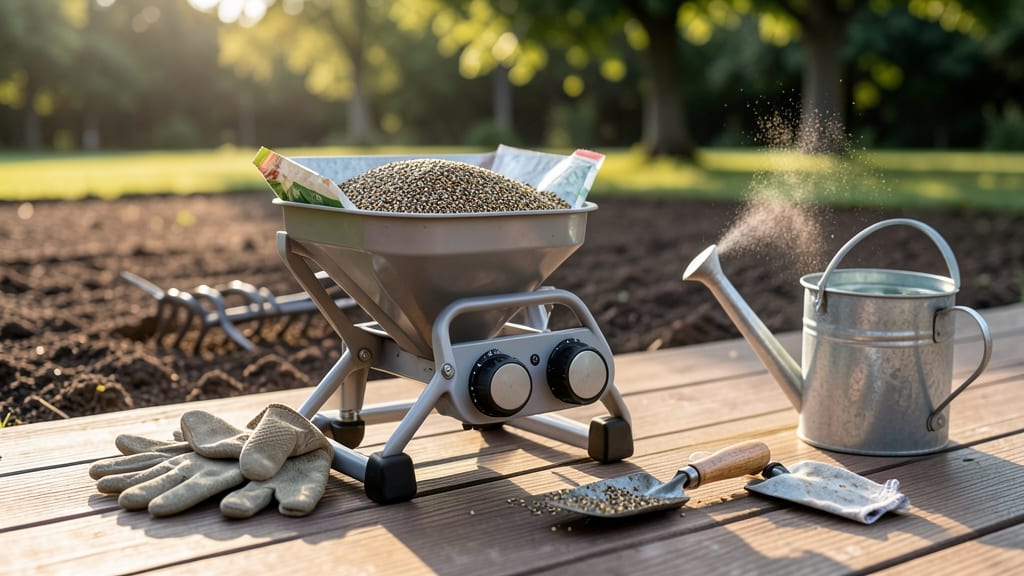
Planting lawn seed in autumn gives you a head start on a lush, weed-resistant lawn by spring—when cooler temps and steady rains work in your favor.
Picture this: you’ve spent hours prepping your yard, only to watch weeds choke out your new grass before it even takes root. That’s why fall planting is the gardener’s secret—fewer weeds, better moisture retention, and roots that establish before winter hits.
In Zone 6a, early September to mid-October is your sweet spot for sowing cool-season grasses like fescue or bluegrass 🌱. The key? Testing your soil, clearing debris, and choosing the right seed for your climate.
Skip these steps, and you’ll end up with patchy, slow-growing grass—or worse, a lawn full of crabgrass.
Below, I’ll walk you through the 4 simple steps to plant, water, and fertilize your lawn this fall so it’s thick, green, and ready to handle next summer’s heat. No guesswork, just results.

Why autumn is the best time for planting cool-season lawn seed
If you’ve ever wondered why gardeners swear by autumn lawn planting, the answer lies in nature’s perfect conditions during this season. Cooler temperatures reduce stress on young grass seedlings, while moderate rainfall keeps soil consistently moist—ideal for root development.
Unlike spring planting, autumn avoids peak weed competition and intense summer heat, giving your lawn a head start before winter dormancy.
Science backs this up: studies show autumn-planted lawns establish 30-50% faster than spring-planted ones. The 60-70°F temperature range in fall is optimal for seed germination, while shorter daylight hours slow grass growth just enough to prevent stress.
Plus, fewer pests and diseases thrive in cooler weather, reducing early threats to your new lawn.
But here’s the catch: timing matters. Planting too early (like July) risks heat stress, while waiting too late (November) may leave seedlings vulnerable to early frosts.
Aim for 4-6 weeks before your first frost date—typically early September to mid-October in most U.S. regions. This window ensures roots establish before winter dormancy kicks in.
Regional differences play a huge role. In northern climates (USDA Zones 3-6), autumn planting is ideal due to longer daylight and consistent moisture. Southern regions (Zones 7-10) can extend planting into late fall or even winter, thanks to milder winters.
However, cool-season grasses like tall fescue or Kentucky bluegrass thrive best in these conditions, while warm-season grasses (like Bermuda) should wait for spring.
Moisture retention is another autumn advantage. Cooler air and reduced evaporation mean the soil stays damp longer, giving seedlings the hydration they need without constant watering. This is especially critical in drought-prone areas, where spring planting often fails due to water restrictions or dry spells.
Weed competition drops dramatically in fall, too. Most annual weeds germinate in spring, so your cool-season grass faces less rivalry for nutrients and sunlight. Even perennial weeds like dandelions grow more slowly in cooler weather, giving your lawn a cleaner start.
This natural weed suppression means less herbicide use and more organic growth.
Let’s break down how autumn outperforms spring planting in key areas—from root development to overall success rates. The comparison below highlights why fall is the golden window for cool-season lawns.
| Factor | Spring Planting | Autumn Planting |
|---|---|---|
| Temperature Range | 50-70°F (varies by region) | 60-70°F (ideal for germination) |
| Moisture Retention | Moderate (evaporation high) | High (cooler air reduces loss) |
| Weed Competition | High (spring weeds germinate) | Low (weeds dormant or slow-growing) |
| Root Establishment | Slower (summer heat stress) | Faster (cooler temps encourage growth) |
| Pest/Disease Risk | Moderate (spring pests active) | Low (fewer pests in fall) |
| Success Rate | 60-70% | 80-90% |
| Best For | Warm-season grasses (Bermuda, Zoysia) | Cool-season grasses (Fescue, Bluegrass) |
The data speaks for itself: autumn planting isn’t just a gardener’s trick—it’s a science-backed strategy for stronger, healthier lawns. By leveraging cooler temps, less competition, and better moisture control, you’re setting your lawn up for success long before spring arrives.
Plus, established roots mean your grass will bounce back faster in spring, outcompeting weeds and filling in bare spots effortlessly.
For northern gardeners, focus on planting between early September and mid-October. In southern climates, extend the window to late October or November, but avoid planting when frost is imminent.
Always check your USDA hardiness zone for precise timing—just 1-2 weeks can make a difference in seedling survival.
Pro tip: If you’re in a transition zone (Zones 6-8), consider planting cool-season grasses
Step-by-step guide: preparing soil and planting lawn seed in fall
Fall lawn planting starts with soil preparation, the foundation for a lush, healthy lawn. I always begin by testing my soil’s pH level—aim for 6.0 to 7.0 for cool-season grasses like Kentucky Bluegrass or Fescue.
If your soil is too acidic, add lime; if alkaline, use sulfur. This step ensures your seeds germinate properly and thrive once planted.
Next, clear the area of debris and weeds. Use a rake to remove leaves, rocks, and old grass clippings. Weeds compete for nutrients and sunlight, so eliminating them early gives your new grass a fighting chance.
I also recommend aerating the soil to break up compacted areas—this helps roots penetrate deeper and improves water absorption.
- ✓ Use a soil test kit to check pH (6.0-7.0).
- ✓ Add compost (1-2 inches) for nutrients.
- ✓ Adjust pH with lime (alkaline) or sulfur (acidic).
- ✓ Rake out debris and weeds thoroughly.
- ✓ Aerate with a core aerator (rent if needed).
- ✓ Loosen soil 4-6 inches deep for roots.
- ✓ Cool-season grasses (e.g., Fescue, Bluegrass) for fall.
- ✓ Avoid warm-season (e.g., Bermuda, Zoysia) in autumn.
- ✓ Mix seed types for durability (e.g., 60% Fescue, 40% Bluegrass).
- ✓ Spread ½ lb seed per 100 sqft evenly.
- ✓ Lightly rake to ¼-inch depth (no deeper!).
- ✓ Cover with straw mulch (not hay) to retain moisture.
- ✓ Water lightly 2x daily (morning/evening) for 10-15 mins.
- ✓ Keep soil consistently moist (not soggy) for 2-3 weeks.
- ✓ Reduce to deep watering 2x/week once established.
Avoid the common mistake of over-seeding—too much seed leads to uneven germination and wasted resources. I’ve learned the hard way that proper seed-to-soil contact is critical. After spreading seed, use a light rake or broom to gently press it into the soil without burying it too deep.
A ¼-inch depth is ideal; deeper planting can prevent seeds from sprouting.
Once planted, watering is key. For the first 2-3 weeks, keep the soil moist by watering lightly twice daily—morning and evening—to encourage germination. After the grass reaches 3 inches tall, switch to deep, infrequent watering (1-1.5 inches per week) to strengthen roots.
Avoid watering at night to prevent fungal diseases like brown patch.
Finally, protect your new lawn from foot traffic and frost. I always cover freshly seeded areas with straw mulch (not hay) to retain moisture and insulate seeds during cool nights.
Avoid mowing until the grass reaches 3-4 inches, and never cut more than ⅓ of the blade height at once. With these steps, your autumn-planted lawn will be thriving by spring.
🌱