
Watering
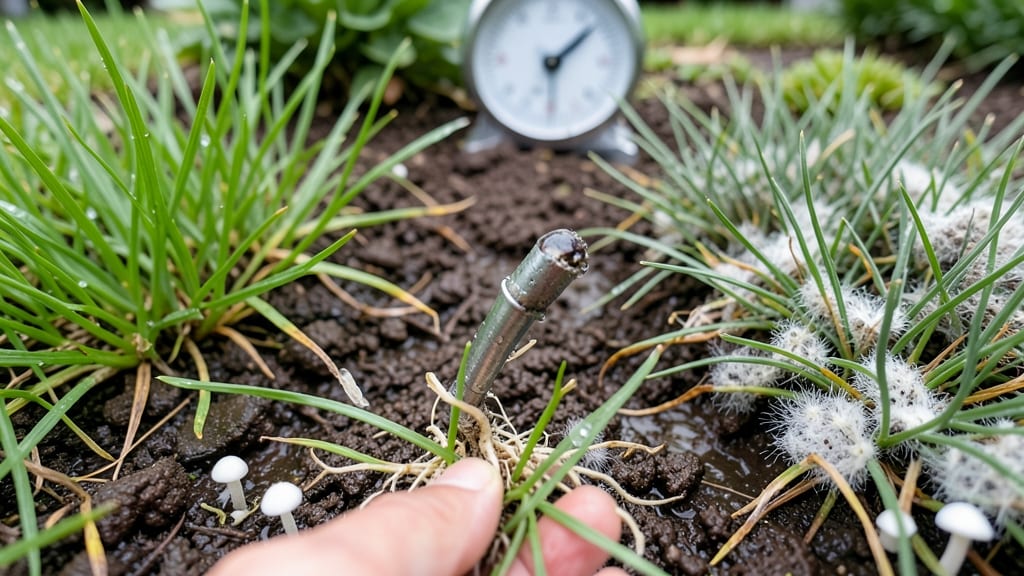
Your lawn might be drowning in water—not just thirsty, thanks to the clear signs of an overwatered lawn. 🌱 The first clue is that bright green grass hiding a dark secret: spongy soil that stays soggy for days, even after rain.
I’ve seen this too many times—lush-looking lawns that collapse into fungal nightmares because homeowners assume "more water is always better." The real damage happens underground where roots suffocate.
Overwatered lawns develop a thick, thatchy layer that blocks air and nutrients, while mushrooms pop up like unwanted guests at a summer BBQ. Even worse, pests like chinch bugs move in when the soil stays too wet, turning your yard into an all-you-can-eat buffet for them.
Here’s the fix: water deeply but only 1-2 times per week, letting the top 2-3 inches dry between sessions. A simple soil test with your finger tells you everything—if it’s damp past 2 inches, you’re overdoing it. Aerating in fall helps too, breaking up that suffocating thatch layer.
The payoff? Grass that stays green without turning into a swamp, fewer fungal outbreaks, and roots that stretch deep for real strength. Trust me—your lawn will thank you more than it ever would with endless watering.
Root Causes Of Soggy Grass
An overwatered lawn isn’t just a minor inconvenience—it’s a soil and grass health crisis triggered by a mix of human habits and environmental factors. Understanding why this happens helps you fix the problem before your yard turns into a swamp. Here’s the science behind the soggy mess:
Most lawns suffer from overwatering because homeowners misjudge frequency and duration. Grass roots need oxygen to thrive, but excessive water displaces it, suffocating the soil. Here’s how it breaks down:
- Short, frequent waterings (e.g., 5 minutes daily) prevent deep root growth. Grass becomes dependent on surface moisture, leading to shallow, weak roots that can’t absorb water efficiently.
- Ignoring soil type: Clay soil holds water like a sponge, while sandy soil drains fast. Overwatering clay turns it into a waterlogged cement, while sandy soil may seem fine—until fungi and pests move in.
- Automatic timers on autopilot: Rainy days + scheduled watering = double the drowning. Many smart sprinklers don’t adjust for weather, leading to chronic oversaturation.
Pro Tip: 💡 Measure soil moisture with a soil moisture meter or the finger test—stick your finger 3 inches deep. If it’s damp, skip watering.
Even with perfect watering habits, compacted or poorly sloped soil traps excess moisture. Here’s how drainage fails:
| Cause | What Happens | Fix It |
|---|---|---|
| Foot traffic or heavy equipment | Compresses soil, crushing air pockets that help water drain. | Aerate with a core aerator (spring/fall). |
| Low-lying areas | Water pools in depressions, creating permanent soggy zones. | Reseed with tall fescue (tolerates wet spots) or add sand/topsoil. |
| Clogged drain pipes | French drains or gutters redirecting water into the lawn instead of away. | Inspect and clean gutters; install swales (shallow trenches) to divert water. |
Warning: ⚠️ If your lawn stays muddy 48+ hours after rain, drainage is the culprit. Test with a percolation test (dig a 12-inch hole; if it fills in <1 hour, drainage is poor).
Overwatered lawns become a buffet for fungi like Rhizoctonia (brown patch) and Pythium (blight). Here’s how moisture fuels the chaos:
- Fungi spores thrive in wet conditions, spreading 24–48 hours after overwatering.
- Thatch buildup (that spongy layer of dead grass) traps moisture, creating a fungal greenhouse.
- Weakened grass can’t fight off pests. Grubs and chinch bugs move in, eating roots in waterlogged soil.
Pro Tip: ✨ Dethatch in early spring if the layer is >0.5 inches thick. Use a vertical mower to slice through compacted thatch.
Not all overwatering is user error—weather and seasons play a sneaky role:
- Humid climates: Air already holds moisture; grass needs less water (check local ET rates—evapotranspiration data).
- Cool seasons: Grass grows slower in fall/winter, so reduce water by 30–50%.
- Heavy rainfall + watering: A 1-inch rainstorm can equal 2–3 watering cycles. Wait 48 hours before rewatering.
Action Step: 📊 Track your lawn’s water needs with a rain gauge. Aim for 1–1.5 inches per week (including rain).
How to solve it
If your lawn is showing signs of overwatering—like yellowing grass, spongy soil, or pesky fungus—don’t panic! With the right steps, you can revive your grass and prevent future waterlogging.
Below, we’ll break down solutions tailored to the root cause of your soggy situation, plus some pro tips to keep your lawn happy and healthy.
If your lawn is drowning in water, the first fix is simple: cut back on the H2O. Overwatering is often a habit, not a necessity. Here’s how to dial it down:
- 🔥 Water deeply but less often: Instead of light, daily sprinkles, water 1–1.5 inches per week (including rain). Use a rain gauge or tuna can to measure—yes, really! 🍣🌧️
- 👨🍳 Water in the early morning: Between 4–8 AM is ideal. This reduces evaporation and gives grass time to dry before evening humidity sets in.
- ⏰ Avoid evening watering: Watering at night traps moisture in the soil, inviting fungus and pests. Save it for sunrise!
- 💡 Check your sprinkler system: Misaligned heads or clogs can waste water. Run a DIY sprinkler test—place buckets around the yard and time how long it takes to fill them. Adjust as needed.
🔥 Pro Tip: If your soil stays soggy for days, you may need to reduce watering by 50% for 2–3 weeks to let it dry out.
Compacted or clay-heavy soil doesn’t drain well, leading to waterlogged grass. Here’s how to fix it:
- 🔪 Aerate your lawn: Rent a core aerator (or hire a pro) to punch holes in the soil, allowing water and air to penetrate. Do this in early fall or spring for best results.
- 🌡️ Add organic matter: Mix in compost or peat moss (2–3 inches) to improve drainage. Spread it evenly, then lightly rake it in.
- 🎯 Level low spots: If water pools in certain areas, use a shovel to redistribute soil or create a slight slope to help drainage.
- ✨ Consider sand or gypsum: For clay soil, top-dress with coarse sand or gypsum to break up compaction over time.
💡 Pro Tip: After aerating, overseed with drought-resistant grass like tall fescue or Bermuda to help the lawn recover faster.
If your lawn has developed mushrooms, slime mold, or grayish fungus, act fast to stop the spread:
- 🍳 Remove affected areas: Pull up soggy grass clumps and dispose of them (don’t compost them—fungus can spread!).
- 🔥 Apply a fungicide: Use a copper-based or nitrogen-free fungicide (like BioAdvanced Fungus Control) and follow label instructions.
- 🌡️ Improve airflow: Thin out dense grass with a mower or string trimmer to reduce humidity at ground level.
- 🎯 Adjust mowing height: Raise your mower blade to 3–4 inches to shade the soil and slow fungus growth.
💡 Pro Tip: Prevent recurrence by watering only in the morning and avoiding heavy foot traffic on wet grass.
Once your lawn is back on track, keep it from getting overwatered again with these habits:
| Action | Why It Works |
|---|---|
| 🌱 Choose drought-tolerant grass | Varieties like Buffalo grass or Zoysia thrive with less water. |
| 🔄 Mulch your yard | Add wood chips or straw mulch to retain moisture without overwatering. |
| 📊 Monitor soil moisture | Stick a soil moisture meter 2–3 inches deep. Water only if it’s dry. |
| 🌧️ Use rain sensors | Install a smart sprinkler controller to pause watering during rain. |
🔥 Pro Tip: Test your soil every 2–3 years. A pH test (available at garden centers) ensures your lawn isn’t fighting poor conditions.
Frequently asked questions about lawn watering
Why does my grass turn yellow when I water it so much?
Yellowing grass from overwatering happens when roots suffocate from too much moisture. When soil stays soggy, oxygen can't reach roots, causing them to starve. The grass may look green at first but turns yellow as roots die back. This often happens with daily light watering that keeps soil damp at the surface.
How can I tell if my lawn has drainage problems?
Poor drainage shows up as puddles lasting 48+ hours after rain or areas that stay muddy. Dig a small hole—if water doesn't drain within an hour, your soil is compacted. Clay soil is especially guilty of trapping water. Look for low spots where water pools after irrigation too.
Are mushrooms in my lawn always a sign of overwatering?
Not always, but they're a major red flag! Mushrooms thrive in damp conditions, often appearing after consistent overwatering. However, they can also grow in shaded areas with natural moisture. If you see them after heavy watering or rain, your lawn is definitely getting too much H₂O.
Can I fix an overwatered lawn by just stopping watering?
Stopping isn't enough—you need to dry out the soil first. Reduce watering by 50% for 2-3 weeks to let excess moisture evaporate. Combine this with aerating to help roots breathe. If fungus has taken hold, you'll need to treat it separately with fungicide while letting the soil recover.
What's the best time of day to water my lawn?
Early morning (between 4-8 AM) is ideal. This gives grass time to dry before evening humidity sets in, reducing fungus risk. Avoid watering at night—moisture lingers, creating perfect conditions for disease. If you must water in the evening, do it at least 3 hours before sunset.