
Lawn
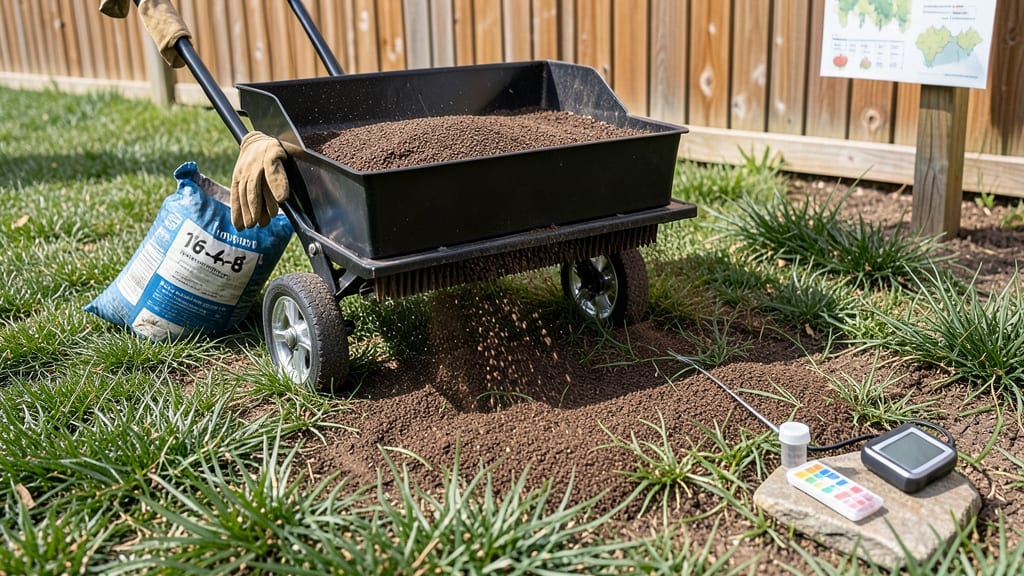
Fertilizing your lawn in North Carolina at the right time can transform a dull, patchy yard into a thick, vibrant green carpet—without wasting money or harming the environment.
Picture this: you’ve just spent the winter dreaming of a lush lawn, only to find it struggling by summer. The key isn’t just what you fertilize with, but when—and in NC’s 6b-8a climate zones, timing is everything.
Spring and fall are the golden windows for feeding your 🌱 lawn grass, but even within those seasons, the Piedmont, Coastal, and Mountain regions have their own deadlines. Get it wrong, and you’ll either burn your grass or watch weeds take over.
In this guide, I’ll break down the exact months to fertilize, how to adjust for your region, and whether organic or synthetic fertilizers work best for your soil. Ready to grow grass that turns heads?
Optimal fertilization schedule for NC lawns: spring & fall deadlines
North Carolina’s diverse climate zones—from the Coastal Plain to the Mountains—create unique challenges for lawn care.
The key to a vibrant lawn lies in understanding when to fertilize, as timing directly impacts grass health and pest resistance. Cool-season grasses like fescue thrive in spring and fall, while warm-season grasses like Bermuda peak in summer. Missing these windows can leave your lawn thin and vulnerable.
Soil temperatures play a critical role in fertilization success. For cool-season grasses, aim for 50-60°F soil temps in spring and 60-70°F in fall. Warm-season grasses need 70-80°F soil temps for optimal nutrient uptake.
Regional adjustments are essential—Coastal areas may need earlier applications, while Mountain regions should delay until later in spring.
Here’s a month-by-month breakdown tailored to NC’s three distinct regions, with deadlines you must not miss to avoid over-fertilizing or wasting money on ineffective applications.
| Region/Month | Cool-Season Grasses (Fescue, Ryegrass) | Warm-Season Grasses (Bermuda, Zoysia) | Soil Temp | Fertilizer Type |
|---|---|---|---|---|
| Coastal (March) | First feeding (high nitrogen) | Light feeding (pre-emergent) | 55-65°F | Slow-release 30-0-4 |
| Coastal (April) | Second feeding (iron supplement) | Full feeding (establishment) | 65-75°F | Quick-release 24-0-8 |
| Piedmont (March) | First feeding (late March) | Light feeding (April) | 50-60°F | Slow-release 24-0-8 |
| Mountains (April) | First feeding (early April) | Full feeding (May) | 55-65°F | Slow-release 30-0-4 |
| All Regions (September) | Fall feeding (high nitrogen) | Light feeding (pre-winter) | 60-70°F | Slow-release 24-0-8 |
| All Regions (October) | Final feeding (low nitrogen) | Skip (dormancy) | 50-60°F | Organic (compost/manure) |
For Coastal NC, start fertilizing cool-season grasses as early as mid-March when soil temps hit 55°F.
Warm-season grasses like Bermuda should get a light pre-emergent feeding in late March to early April. Piedmont regions can delay until late March due to cooler nights, while Mountain areas often wait until early April to avoid frost damage.
Summer fertilization is critical for warm-season grasses. Apply monthly feedings from May through August, using a high-nitrogen fertilizer like 30-0-4. Cool-season grasses should receive light summer feedings only if they show signs of stress, like yellowing. Over-fertilizing in summer can burn grass and attract pests like chinch bugs.
The fall feeding window is your best chance to strengthen roots before winter. For cool-season grasses, apply two feedings: one in early September with high nitrogen and another in late October with low nitrogen. Warm-season grasses should get a light feeding in September before going dormant.
This timing ensures your lawn stays green longer and recovers faster in spring.
Miss these deadlines, and you risk brown patches
How to choose the right fertilizer for NC’s soil and grass types
North Carolina’s diverse climate and soil types mean your lawn’s fertilizer needs vary dramatically depending on whether you have Bermuda grass in the Coastal Plain or tall fescue in the Mountains. The wrong fertilizer can waste money, burn grass, or even harm local ecosystems.
Start by identifying your grass type—warm-season grasses like Bermuda thrive with high-nitrogen fertilizers in summer, while cool-season grasses like fescue need moderate nitrogen in spring and fall.
Next, get a soil test from your local Cooperative Extension office. NC soils often lack organic matter or have pH imbalances, which directly affect how your lawn absorbs nutrients.
A test will reveal if you need to adjust pH before fertilizing—most NC lawns benefit from a slightly acidic pH (6.0-7.0). Without this step, even the best fertilizer won’t work as intended.
Organic vs. Synthetic Fertilizers for NC Lawns
- Pros: Improves soil health long-term, slow-release nutrients, eco-friendly
- Cons: Slower results, may require larger quantities, higher cost per pound
- Pros: Fast-acting, precise NPK ratios, budget-friendly for quick fixes
- Cons: Can burn grass if overapplied, no soil benefits, environmental runoff risks
For warm-season grasses like Bermuda or Zoysia, prioritize slow-release fertilizers with a 30-0-4 NPK ratio in late spring through summer.
These grasses go dormant in winter, so avoid fertilizing then. Cool-season grasses like fescue or bluegrass need a 24-0-8 or 28-0-4 ratio in early spring and fall, with a lighter touch in summer to prevent stress.
Pro tip: Look for fertilizers labeled "NC-friendly" or "low-phosphorus"—NC laws restrict phosphorus use to protect waterways.
Timing matters just as much as type. Apply slow-release fertilizers in early spring (March-April) and late fall (October) for cool-season grasses, while warm-season grasses need feedings in May-June and July-August.
Always water your lawn deeply after fertilizing to activate nutrients and prevent runoff. For organic options, consider composted manure or fish emulsion, which add organic matter while feeding your grass.
If your lawn has brown patches or uneven growth, it might be suffering from nutrient burn or pH issues. In this case, switch to a low-nitrogen fertilizer (like 10-0-10) and retest your soil.
For sandy soils common in the Coastal Plain, use pelletized chicken manure—it sticks around longer than granules. Clay-heavy soils in the Piedmont benefit from gypsum to improve drainage before adding fertilizer.
Remember, less is often more in NC’s humid climate. Over-fertilizing leads to algae blooms in nearby waterways and fungal diseases in your lawn. Start with half the recommended dose, monitor your grass’s response, and adjust next season.
With the right fertilizer and timing, your NC lawn can achieve that deep green envy of your neighbors—without the guesswork.