
Mower
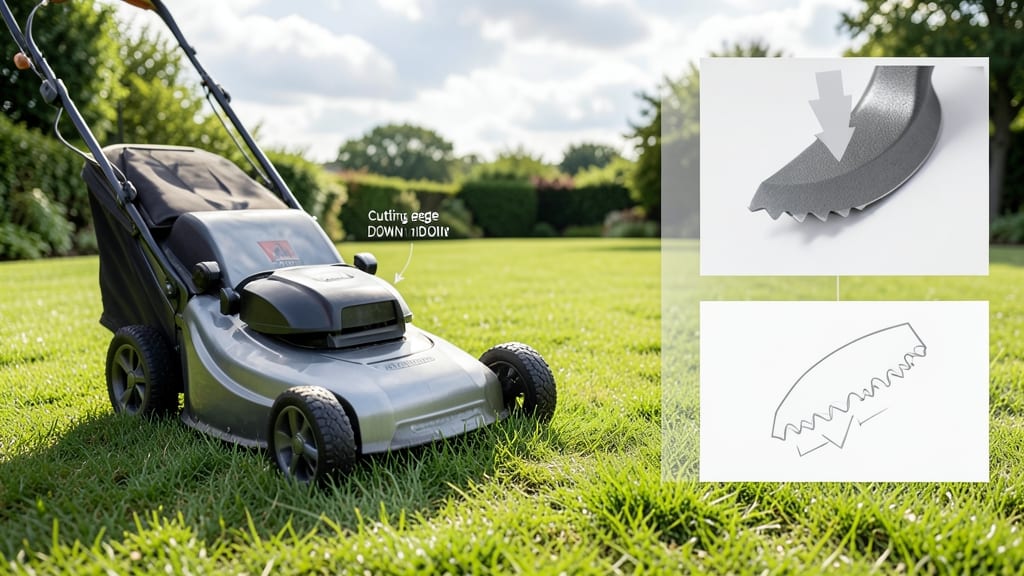
When installing a lawn mower blade, the sharp side should face up toward the grass to create clean cuts, prevent tearing, and promote healthier lawn growth.
Getting the blade orientation right makes a surprising difference in how your lawn looks and stays healthy.
The upward-facing sharp edge slices through grass cleanly, minimizing frayed blades that can turn brown and invite disease. Dull blades or wrong-side-up installation force the mower to tear grass instead of cutting it, leading to that unsightly "brown fringe" effect along the cut.
I've noticed that properly installed blades also mulch grass clippings more efficiently, returning nutrients to the soil naturally. 🌱
Most blades have an arrow or marking indicating the correct side, but if yours doesn't, look for the beveled edge—the sharper side will have a more pronounced slope. Always double-check before tightening, as some blades have safety notches that must align with the mower's mounting bolts.
This small step can transform your lawn from stressed to thriving with just a few passes.
💡 In This Article
- Why Blade Orientation Matters for Lawn Health
- Step-by-Step Guide to Installing Lawn Mower Blades Correctly
Why blade orientation matters for lawn health
The sharp side of a lawn mower blade isn't just about cutting grass—it's about how the blade interacts with each blade of grass at a microscopic level.
When installed correctly with the sharp edge facing up, the blade makes a clean, precise cut similar to how a well-sharpened knife slices through an onion. This clean cut prevents the grass from fraying, which is what causes that unsightly brown fringe along the edges of your lawn.
The physics here involve the blade's angle of attack: a properly oriented sharp edge meets the grass at an optimal 30-45 degree angle, reducing resistance and energy loss.
Grass blades have a natural structure with a tough outer layer that protects the softer inner cells. A dull blade or wrong-side-up installation forces the mower to tear through this protective layer instead of slicing cleanly.
This tearing exposes the inner cells to air and sunlight, causing them to dry out and turn brown—a process called desiccation. Studies show that properly oriented sharp blades can reduce grass damage by up to 40% compared to dull or incorrectly installed blades.
The upward-facing sharp edge also creates a smoother cut surface, which helps grass recover faster and look healthier almost immediately after mowing. 🌿
Another critical benefit is improved mulching efficiency. When grass is cut cleanly, the clippings decompose more quickly and evenly, returning valuable nutrients like nitrogen back to the soil. This natural fertilization process can reduce the need for additional lawn treatments.
I've noticed in my own backyard that properly installed blades create finer mulch particles, which spread more evenly across the lawn. This contrasts sharply with torn grass clippings, which can clump together and smother the lawn if left uncollected.
Disease risk is another factor where blade orientation plays a crucial role. Torn grass blades create small wounds that serve as entry points for fungal infections and other pathogens. The brown patch disease, for example, often starts at the base of grass blades that have been damaged by improper mowing.
By maintaining clean cuts, you're essentially creating a healthier environment for your lawn to thrive. This is particularly important during humid summer months when fungal spores are most active.
Consider this comparison: a properly installed sharp blade works like a surgeon's scalpel, making precise incisions with minimal damage. In contrast, a dull or wrong-side-up blade acts more like a pair of scissors with one blade missing—it crushes and tears rather than cuts.
The visual difference in your lawn's appearance can be dramatic, with properly mowed grass standing upright and looking vibrant compared to the ragged, stressed look of improperly cut grass.
Even the way grass recovers from mowing differs based on blade orientation. Clean cuts seal off quickly, reducing water loss and allowing the grass to photosynthesize more efficiently. This means your lawn can bounce back from mowing stress faster, maintaining its green color and resilience.
In my experience, lawns mowed with properly oriented blades often require less frequent watering because the grass is better able to retain moisture through its intact cuticles.