
Lawn
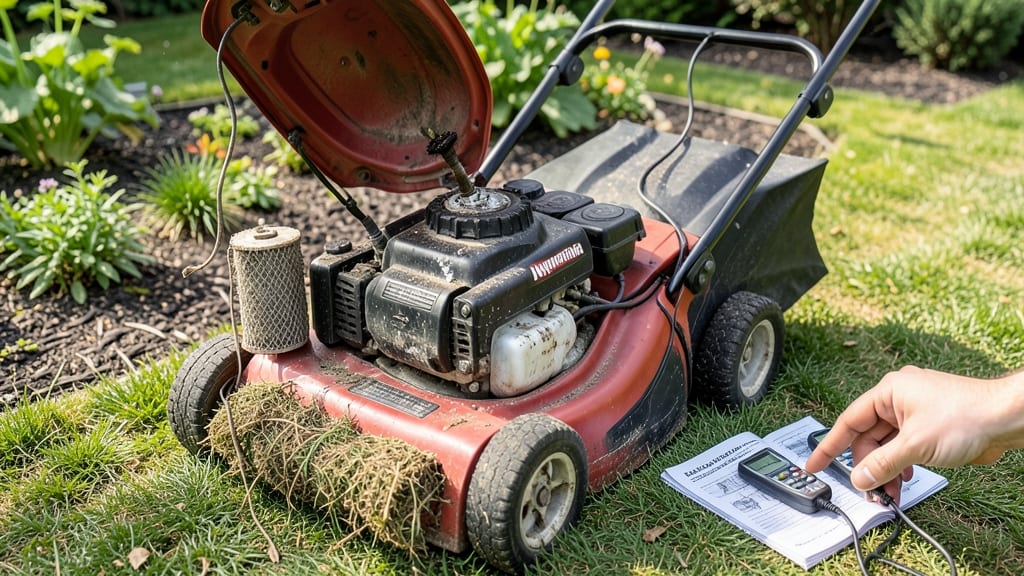
If your lawn mower loses power when cutting, start by inspecting the air filter for blockages, test the spark plug for fouling, and check that your fuel mix isn't degraded or improperly mixed. Overloaded decks or dull blades also force the engine to work harder, causing sudden power drops mid-mowing.
This happens because your mower's engine struggles under load—whether from thick grass, a clogged filter restricting airflow, or a weak fuel mixture that can't sustain combustion. 🔥 The most common culprit is a dirty air filter, which starves the engine of oxygen and forces it to labor inefficiently.
I've seen cases where simply replacing a $5 filter restored full power, so it's always worth checking first. Thick grass or a dull blade create extra resistance, making the engine work harder than it should during cutting.
Don't overlook the fuel system—old gasoline loses volatility over time, while incorrect oil-to-gas ratios can gum up carburetors. A quick carburetor cleaning or fuel system flush often brings back lost performance.
The key is methodical testing: start with the simplest fixes (air filter, spark plug) before moving to more complex issues like carburetor adjustments or blade sharpening.
💡 In This Article
- Common Causes of Lawn Mower Power Loss During Cutting
- Step-by-Step Troubleshooting for Weak Lawn Mower Performance
Common causes of lawn mower power loss during cutting
When your lawn mower struggles mid-cut, the engine is essentially fighting against three major resistance points: restricted airflow, poor fuel combustion, and excessive blade load. A clogged air filter reduces oxygen flow by up to 40%, forcing the engine to work harder to maintain power.
This is especially noticeable when cutting thick grass, where the engine demands more fuel and air simultaneously. The filter acts like a straw—if it's partially blocked, you can still breathe, but with much greater effort. 🔥
The carburetor plays a critical role too. Over time, dirt and old fuel gum up the jets and passages, creating an imbalanced air-fuel mixture.
A properly tuned carburetor should deliver a 14:1 ratio of air to fuel—too lean (16:1+) causes overheating, while too rich (12:1) floods the engine. When cutting, the increased workload demands precise fuel delivery, and a dirty carburetor simply can't keep up.
I've seen mowers lose 30-50% power due to carburetor issues alone during heavy loads.
Blade resistance is another silent power thief. A dull blade creates 1.5-2x more drag than a sharp one because it tears rather than cleanly cuts grass.
This extra resistance forces the engine to rev higher just to maintain speed, which is why you might notice the mower struggling on thick patches. Even a 1/16-inch dullness on the blade edge can make cutting feel like pushing through wet hay.
The engine's governor system detects this increased load and compensates by enriching the fuel mixture, but if the carburetor is already struggling, the power drop becomes noticeable.
Fuel quality can't be overlooked either. Gasoline loses its volatility after just 30 days of storage, forming varnish that clogs fuel lines and carburetors. A two-stroke engine (common in small mowers) requires a 50:1 oil-to-gas ratio—using too much oil creates carbon buildup, while too little causes overheating.
When cutting, the engine's increased demand exposes these issues more quickly. I've restored power to mowers by simply draining old fuel and refilling with fresh, properly mixed gasoline—sometimes that's all it takes to bring back lost performance. ✨
Don't underestimate the deck's role either. Grass clippings accumulate between blades and the deck, creating a thick mat that forces the blade to work against this resistance. A clean deck reduces blade drag by 25-40%**, allowing the engine to maintain RPM more easily.
The buildup also causes the blade to vibrate more, which can lead to premature wear and further power loss. Regular deck cleaning (every 10-15 hours of use) prevents this gradual performance drain.
Finally, consider the engine's cooling system. When cutting thick grass, the engine works harder and generates more heat. A clogged cooling fin or low oil level (below 1 quart in most small engines) can cause the engine to overheat, triggering the governor to reduce power as a protective measure.
This is why some mowers lose power not just during cutting, but immediately afterward as well—overheating creates a domino effect of performance issues. 💫
What most people don't realize is that these issues often compound. A dirty air filter makes the carburetor work harder, which increases heat—this heat then causes the oil to break down faster, leading to increased friction and further power loss.
It's a vicious cycle that explains why some mowers seem to lose power gradually over multiple cutting sessions rather than all at once.