
Mower
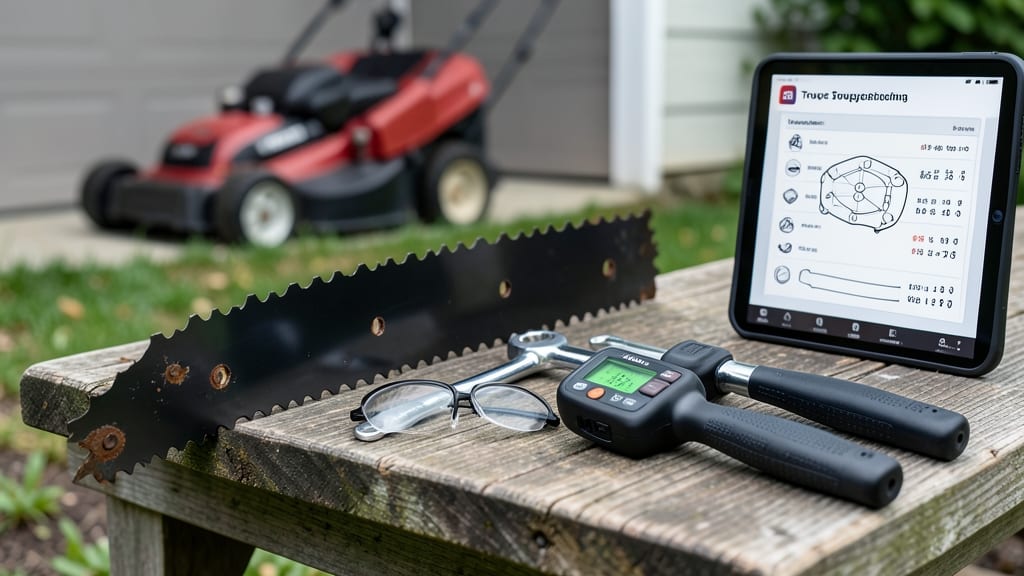
Torque specs for lawn mower blades range from 60–120 ft-lbs depending on engine type (small engines: 60–80 ft-lbs; larger commercial engines: 100–120 ft-lbs) and blade size (small residential blades: 60–80 ft-lbs; heavy-duty blades: 90–120 ft-lbs). Always check the manufacturer’s manual for exact PSI settings to avoid over-tightening or loosening.
Understanding torque specs prevents blade damage and ensures your mower runs smoothly. 🌱 The right torque keeps bolts secure without stripping them—too loose, and the blade wobbles; too tight, and you risk cracking the bolt or blade.
For instance, a 4–6 HP engine with a 20-inch residential blade typically needs 60–70 ft-lbs, while a 15+ HP commercial mower with a 24-inch heavy-duty blade might require 100–120 ft-lbs. Always use a torque wrench for precision, never guesswork.
Blade material also plays a role: steel blades often need slightly less torque than alloy blades due to their density. I’ve seen many DIYers over-tighten out of fear the blade will loosen—this is a common mistake that leads to stripped bolts or cracked blades.
Pro tip: After the first use, recheck torque after 10–15 hours of operation to account for any settling.
💡 In This Article
- How Engine Type and Blade Size Affect Lawn Mower Torque Specs
- Step-by-Step Guide to Measuring and Applying Correct Torque
How engine type and blade size affect lawn mower torque specs
Torque specs aren't arbitrary—they're directly tied to the physics of your mower's engine and blade. A 4–6 horsepower (HP) engine, common in push mowers, generates less rotational force than a 15+ HP engine found in commercial-grade machines.
This means smaller blades (like 18–20 inches) attached to these engines need less torque—typically 60–70 ft-lbs—because they experience less centrifugal force during operation.
Think of it like this: A lightweight blade spinning at 3,000 RPM creates less stress on bolts than a heavy-duty 24-inch commercial blade spinning at the same speed, which can require up to 120 ft-lbs of torque. 🔧
The relationship between engine power and torque isn't linear—it's exponential. For every 1 HP increase in engine size, you might see a 5–10 ft-lbs increase in required torque, depending on blade design.
This is why a 10 HP mower with a 22-inch blade might need 85–95 ft-lbs, while a 12 HP mower with the same blade size could require 95–105 ft-lbs.
Blade material adds another layer: Alloy blades, which are denser than steel, need slightly more torque (10–15 ft-lbs higher) because their mass creates more stress on the bolts during operation.
I've seen many homeowners over-tighten steel blades out of caution, only to strip the bolts when switching to alloy.
Exceeding the recommended torque creates a dangerous cycle. When you overtighten bolts, you compress the threads beyond their yield point, which can cause them to stretch permanently. This "thread stretching" reduces the bolt's clamping force over time, leading to loosening during operation.
The worst-case scenario? A bolt snaps mid-mow, sending the blade flying at 3,500 RPM—a hazard that's completely preventable with proper torque specs. 🚨 Under-tightening is equally problematic: Blades can wobble, causing uneven cuts and premature wear on both the blade and the mower deck.
The sweet spot is always the manufacturer's specified range, which balances security and safety.
Here's a practical breakdown of how these factors interact:
- Small engines (4–6 HP): 60–70 ft-lbs for 18–20-inch residential blades (ideal for push mowers and lightweight decks)
- Mid-range engines (8–12 HP): 75–95 ft-lbs for 20–22-inch blades (common in self-propelled mowers)
- Commercial engines (15+ HP): 100–120 ft-lbs for 24–26-inch heavy-duty blades (used in stadium mowers and zero-turn models)
Blade size matters just as much as engine power. A 24-inch blade on a 10 HP engine will experience 30–40% more centrifugal force than a 20-inch blade on the same engine, which is why the torque spec jumps from 85 ft-lbs to 100 ft-lbs in that scenario.
The key is understanding that torque specs exist to counteract these forces while keeping the connection secure. 💡
One often-overlooked factor is the bolt pattern. Most residential mowers use 3/8-inch bolts, while commercial models may require 1/2-inch or 5/8-inch bolts. Larger bolts need more torque to achieve the same clamping force because their threads are thicker.
For example, a 1/2-inch bolt might need 10–15 ft-lbs more torque than a 3/8-inch bolt to achieve the same level of security. Always match the bolt size to the blade specification—using the wrong bolt can void the torque spec entirely.