
Lawn
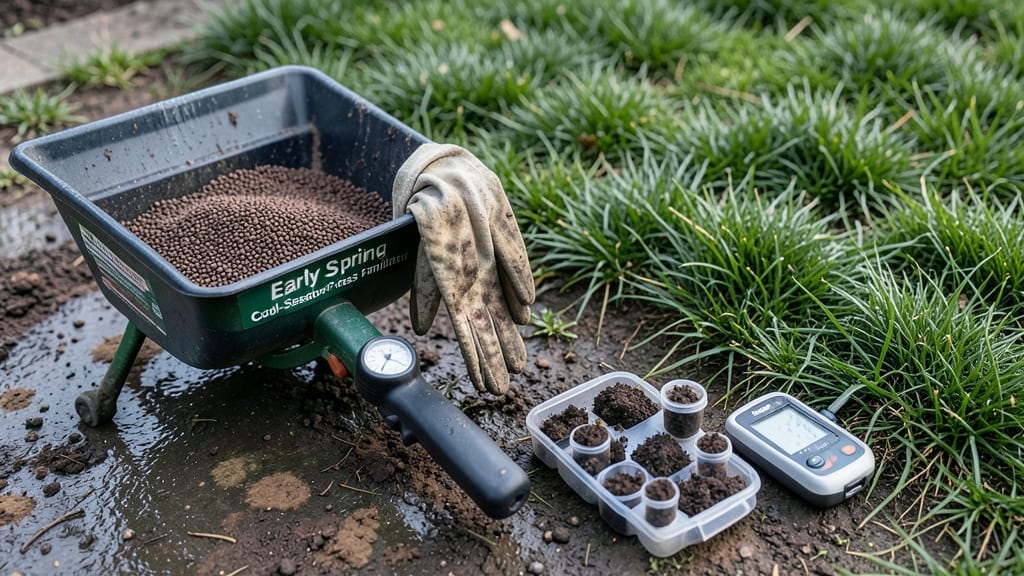
Fertilizing lawn after winter at the right time is the difference between a lush, green carpet and patchy, struggling grass 🌱 — and the calendar alone won’t tell you when that is.
Waking up your lawn after winter dormancy requires timing—apply fertilizer too early, and you risk burning tender grass; too late, and your lawn misses critical growth spurts. The secret lies in soil temperature, not just the calendar.
Most lawns in Zone 6a need fertilizer when soil reaches 45°F–65°F, but that window shifts in warmer or cooler regions. I’ll show you how to test it yourself—no fancy tools required—and when to adjust based on your grass type.
Skip the guesswork with my step-by-step guide, including when to avoid fertilizing (yes, even in spring) and how to spot over-fertilization before it’s too late.

Best soil temperature for fertilizing lawn after winter
Spring is the prime time to fertilize your lawn, but rushing too early can damage tender grass waking from winter dormancy. The soil temperature is your best indicator—45°F to 65°F is the sweet spot for most lawns.
This range ensures grass roots are active enough to absorb nutrients without stress. Cool-season grasses like Kentucky bluegrass and fescue respond best in this window, while warm-season grasses like Bermuda may need slightly warmer soil.
Why soil temperature matters more than dates? Cold soil slows microbial activity, reducing nutrient breakdown, while warm soil speeds up growth—sometimes too fast. Fertilizing at 50°F or below risks burning delicate grass shoots.
Even if your calendar says "spring," check the ground first. Northern climates often wait until late April or May, while southern regions can start as early as February.
Here’s how to match your region to the right timing:
For cool-season grasses, aim for 50°F soil—this triggers root growth without overwhelming tender shoots. Use a soil thermometer (inserted 4 inches deep) for accuracy.
If your lawn is still frost-prone, wait until nighttime lows stay above 40°F. Warm-season grasses like Bermuda thrive at 60°F+, so don’t fertilize until soil warms consistently.
Regional adjustments are key: In USDA Zone 5, I’ve seen lawns struggle when fertilized before May 1st, even if the calendar says spring. Meanwhile, in Zone 9, lawns wake up by February 15th. Test your soil for 3–5 days to confirm stability—temperature swings can delay growth.
Pro tip: Early morning is the best time to check soil temp; it’s cooler and more accurate.
What if your soil is too cold? Hold off until temperatures rise by 5°F for 3 days. Cold soil locks out nutrients, wasting your fertilizer. Too warm (>70°F)?
You risk fertilizer burn—grass can’t absorb excess nutrients fast enough. Slow-release fertilizers are safer in borderline temps, giving grass time to adjust.
Don’t ignore grass color as a secondary cue. Healthy lawns show green edges first—this means roots are active. If your lawn is still grayish or sparse, it’s not ready. Overseeding before fertilizing?
Wait until soil hits 55°F to avoid seedling stress. Patience here pays off with thicker, greener growth by summer.
For organic fertilizers, the window is slightly wider (45°F–68°F) because they break down slower. Synthetic fertilizers demand stricter timing (50°F–65°F) to prevent burn. I’ve used compost tea in Zone 6 as early as April 1st when soil hit 52°F, with great results.
Always water deeply after applying—this helps nutrients reach roots.
Remember: Soil temperature ≠ air temperature. Shady areas stay 5–10°F cooler than sunny spots. Test multiple zones in your lawn for consistency. Compacted soil also retains cold longer—aerate before fertilizing if your lawn feels hard.
With the right timing, your lawn will green up faster and stay resilient through summer.
Ready to fertilize? Grab your soil thermometer and check those temps—your lawn’s spring revival starts with the ground, not the calendar. 🌱
Step-by-step guide: how to check soil temperature before fertilizing
Testing your soil temperature before fertilizing is the key to avoiding burned grass or wasted nutrients. Cool-season grasses like fescue and bluegrass need soil between 45°F–65°F to wake up safely. Warm-season grasses like Bermuda or Zoysia prefer 65°F–75°F—but timing matters more than the thermometer reading alone.
You don’t need expensive tools to check soil temperature. A digital soil thermometer (around $15) gives precise readings, while DIY methods like a meat thermometer or even a thermometer from your fridge work in a pinch.
The critical depth is 2–4 inches, where grass roots are most active. Test multiple spots—soil temperature can vary by 10°F across your yard!
Here’s how to check soil temperature accurately, even if your yard has compacted soil or inconsistent readings:
Use a soil thermometer (digital or analog) with a long probe (3–4 inches). Avoid short kitchen thermometers—they won’t reach root depth.
Push the probe into the soil horizontally (not vertically) to avoid compacted layers. Angle it slightly downward for accuracy.
Soil temperature fluctuates near the surface. Hold the probe steady for 30 seconds before reading—especially on sunny days or after rain.
Test 3–5 areas—shady spots stay 5–10°F cooler than sunny patches. Average the readings to get your yard’s true temperature.
If readings seem too low, loosen soil with a hand trowel or aerator. Compacted soil traps cold and delays warming by 1–2 weeks.
Test soil on a cloudy morning (after sunrise) for the most stable reading. Avoid midday heat, which can skew results by 10°F+.
If your soil is below 45°F, wait 1–2 weeks and retest. Grass roots won’t absorb nutrients until temperatures rise. For warm-season grasses, hold off until soil hits 65°F—fertilizing too early can stress young shoots. Pro tip: Keep a soil thermometer in your gardening toolkit for future checks!
Once your soil hits the sweet spot, apply slow-release fertilizer in early morning to avoid burn risks from afternoon heat. Water lightly afterward to help nutrients penetrate 2–3 inches deep. 🌱