
Lawn
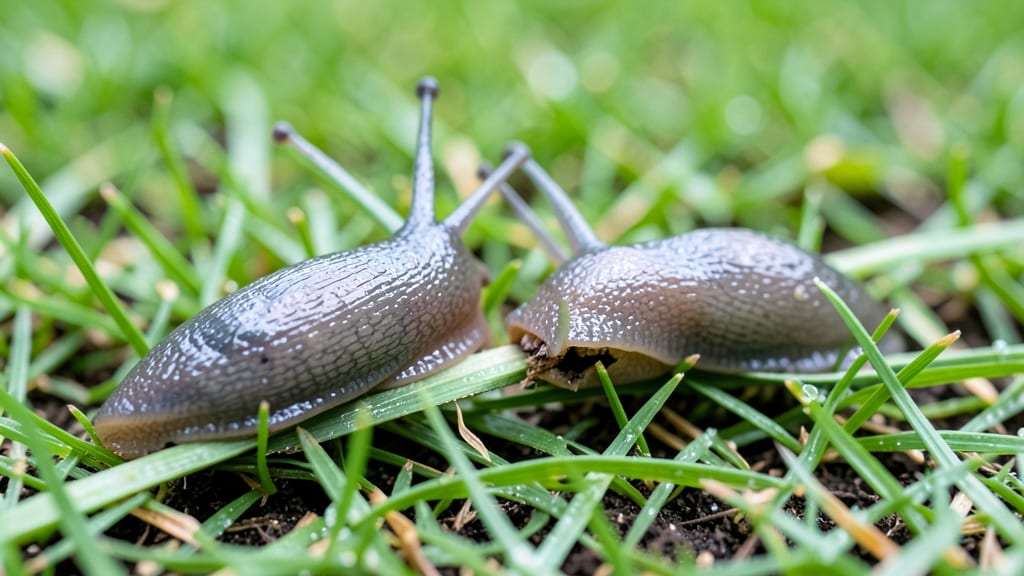
Slugs are bad for your lawn because they devour tender grass, young seedlings, and leafy plants, leaving behind irregular holes and silvery slime trails that weaken vegetation and disrupt growth patterns. Their feeding can create patchy, unsightly lawns and kill new plantings entirely.
These nocturnal pests don't just nibble—they destroy entire sections of your lawn overnight, especially during damp conditions. 🌱 Their slime trails don't just look unsightly; they actually interfere with plant respiration by coating leaves and stems.
The real damage comes when they target new plantings or weak grass, creating those telltale ragged edges that ruin your landscape's appearance. I've seen entire flower beds decimated in just a few nights, which is why early intervention matters so much.
What makes slugs particularly problematic is their ability to thrive in both shaded and moist areas, often going unnoticed until the damage appears. Unlike snails, they lack protective shells, making them harder to spot during the day when they hide under mulch or debris.
Their feeding patterns create a domino effect—what starts as small holes can quickly turn into barren patches if left unchecked.
💡 In This Article
- How Slugs Damage Lawns and Garden Plants
- Natural Slug Control Methods for Healthy Lawns
How slugs damage lawns and garden plants
Slugs primarily feed at night when humidity is high and temperatures drop below 75°F, making them most active during late evening and early morning hours. Their feeding patterns are highly destructive because they target the most vulnerable parts of plants—young seedlings, tender grass blades, and soft stems.
Unlike snails, which leave distinctive spiral feeding marks, slugs create irregular, jagged holes along leaf edges or entirely consume small plants, leaving only the tougher veins behind.
Their slime trails aren't just messy—they contain mucus that can actually harm plants by blocking stomata (tiny pores) on leaves, which interferes with photosynthesis and respiration. Studies show that prolonged exposure to slug slime can reduce plant growth by up to 30% in severe cases.
The slime also creates a film that traps moisture against plant surfaces, promoting fungal growth like powdery mildew. 🌱 What's worse is that slugs often feed on the undersides of leaves, where damage goes unnoticed until it's too late.
Slugs have a particular fondness for new plantings, often consuming entire seedlings down to the soil line. This creates the classic "shot-hole" pattern in lawns where circular patches of dead grass appear overnight. Their feeding weakens plant roots by consuming the tender root hairs that absorb water and nutrients.
In vegetable gardens, they'll target lettuce, hostas, and strawberries—plants with soft, water-rich tissues that are easy to digest. The damage isn't just cosmetic; it can completely prevent plants from establishing strong root systems.
There's a key difference between slug and snail damage that helps with identification. Snails leave behind a frothy white trail of mucus and often create larger, more defined feeding marks due to their heavier shells.
Slugs, being shell-less, move faster and leave thinner, more silvery trails that can stretch up to 2 feet per hour in ideal conditions. Their damage appears more random and less predictable, making them harder to detect until significant harm is done.
The most vulnerable plants are those with broad leaves and shallow root systems, like impatiens or young turfgrass.
What makes slugs particularly effective garden destroyers is their reproductive rate. A single slug can lay up to 50 eggs per clutch, and with multiple generations per year, infestations can explode during wet seasons.
The eggs are tiny (about 1/8 inch in diameter) and often hidden in moist soil or under mulch, making them difficult to spot until the hatchlings emerge. This rapid population growth means what starts as a few visible trails can quickly become an uncontrollable outbreak if not addressed early.
One often-overlooked aspect of slug damage is how it affects soil health. Their feeding creates small depressions in the soil surface that collect water, creating micro-environments perfect for fungal growth.
The organic matter they consume (like decaying leaves) gets broken down differently than natural decomposition processes, potentially altering soil pH levels in localized areas. Over time, this can create uneven growing conditions across your lawn or garden beds. 🌿