
Lawn
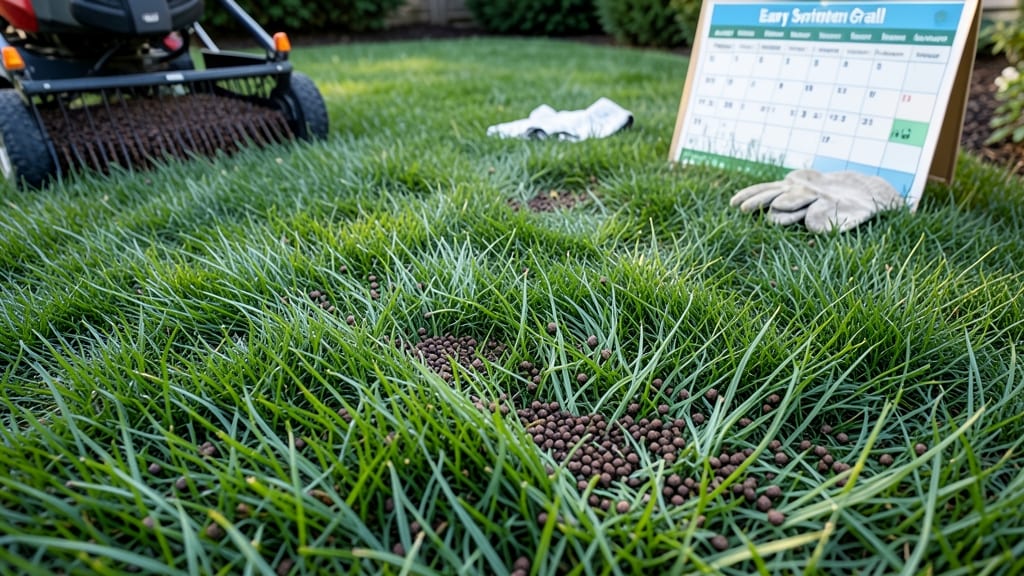
The best time to fertilize lawn grass is in early spring and late summer 🌱—just as growth kicks into gear and roots need a boost.
Struggling to keep your lawn lush and green year-round? Timing your lawn fertilization correctly can make all the difference—miss the window, and you risk weak growth, pests, or wasted nutrients.
Cool-season grasses like Kentucky bluegrass or fescue thrive with a spring feeding as soon as the soil warms to 55°F, while warm-season types like Bermuda grass need their first dose in late spring after the last frost.
In this guide, I’ll break down the exact seasonal schedule for your grass type, plus how to spot when your lawn is truly hungry (and when to skip the fertilizer entirely).
Optimal fertilization timing by grass type and season
Your lawn's health depends on timing fertilization correctly—but the best schedule varies dramatically between cool-season and warm-season grasses. Cool-season grasses like Kentucky bluegrass and fescue thrive in spring and fall, while warm-season types such as Bermuda and Zoysia peak in summer.
Applying fertilizer at the wrong time can lead to burned grass, wasted nutrients, or even pest invasions.
To maximize root development and color vibrancy, follow a seasonal approach tailored to your grass type. Early spring kickstarts growth, late spring builds density, summer maintains strength, and fall fortifies roots for winter. Let's break down the exact windows and fertilizer types for each season and grass category.
🌱 Pro Tip: Always test your soil first—pH levels between 6.0-7.0 are ideal for most grasses. If your soil is acidic or alkaline, adjust with lime or sulfur before fertilizing.
For cool-season grasses, the early spring feeding is critical—apply fertilizer 4-6 weeks before the last frost date in your area. This jumpstarts growth before weeds take over. In late spring, switch to a balanced fertilizer to encourage dense root systems and thick blades.
I recommend a second application in late spring (around Memorial Day) for maximum density.
Warm-season grasses, however, shouldn’t be fertilized until soil temps reach 65°F or higher. This usually happens in late spring or early summer. Use a slow-release fertilizer in June and August to prevent burn during peak heat.
Avoid fertilizing in July—this is when warm-season grasses go dormant to conserve moisture.
🌡️ Climate Tip: In hot, dry climates (like the Southwest), fertilize early in the morning to reduce volatilization of nitrogen. Water your lawn deeply before and after applying fertilizer to help nutrients penetrate the soil.
Fall is the most important fertilization window for cool-season grasses. A light application in early fall (around Labor Day) strengthens roots, while a second feeding in late fall (6-8 weeks before frost) helps grass survive winter.
For warm-season grasses, a light fall feeding can help them transition smoothly into dormancy.
One common mistake is fertilizing in winter—this causes winter burn and nutrient runoff. Always skip fertilization from November to February, even if your lawn looks patchy. Instead, focus on aeration and overseeding in early spring to revive weak areas.
To apply fertilizer correctly, use a spreaders for even distribution—never apply more than the recommended rate. For newly seeded lawns, wait 6-8 weeks after seeding before fertilizing
Signs your lawn needs fertilizer (and when to avoid it)
Your lawn communicates its needs through subtle (and not-so-subtle) signs. Yellow patches or pale green blades often signal nitrogen deficiency, while thin, patchy growth may indicate phosphorus or potassium shortages.
Before reaching for fertilizer, though, I always check for hidden stressors like drought stress or fungal diseases—these can mimic nutrient deficiencies but require different solutions.
Soil tests are your best friend here. A simple home test kit (around $20) can reveal pH levels and basic nutrient deficiencies. For example, acidic soil (pH below 6.0) locks out nutrients like phosphorus, making fertilization less effective.
If your test shows balanced pH but your lawn still looks weak, it’s time to fertilize—but only after addressing other issues like compacted soil or poor drainage.
⚠️ callout-warning ⚠️
Fertilizing at the wrong time can harm your lawn more than help. Delay fertilization if:
- 🌡️ Extreme heat or drought: High temperatures stress grass, making it absorb nutrients poorly. Wait until soil is moist.
- 🌧️ Heavy rain forecast: Fertilizer washes away, wasting money and polluting waterways. Apply 24–48 hours before rain.
- 🍄 Fungal diseases present: Fertilizer can worsen issues like brown patch or dollar spot. Treat diseases first.
- 🌱 Newly seeded or sodded lawns: Wait 6–8 weeks after seeding or 4–6 weeks after sod installation.
Pro Tip: Early morning is the best time to fertilize—cooler temps reduce stress, and grass has time to absorb nutrients before evening dew.
Your soil type plays a huge role in fertilization timing. Clay soil holds nutrients tightly, so I fertilize less frequently (every 8–10 weeks) but with slow-release formulas to prevent runoff. Sandy soil, on the other hand, drains quickly, so I apply fertilizer every 4–6 weeks and water deeply afterward to lock nutrients in place.
Always adjust your schedule based on your soil’s drainage and nutrient-holding capacity.
Don’t ignore seasonal red flags. In summer, if your lawn turns blue-gray or feels crunchy underfoot, it’s likely suffering from heat stress, not nutrient deficiency. Hold off on fertilizing until temperatures drop below 85°F.
Similarly, in fall, a dark green but sparse lawn might need a light nitrogen boost for root growth, but avoid heavy feeding—it encourages tender new growth that won’t survive winter.
For acidic soils (common in pine forests or northern climates), I recommend a lime application before fertilizing to raise pH. Aim for a target pH of 6.0–7.0 for most grasses.
If your soil is alkaline (pH above 7.5), use a sulfur-based fertilizer or peat moss to lower pH gradually. Always retest soil after adjustments—pH swings can stress grass more than nutrient imbalances.
Finally, pay attention to grass type. Cool-season grasses (like Kentucky bluegrass or fescue) need early spring and fall feedings, while warm-season grasses (like Bermuda or Zoysia) thrive with late spring and summer fertilization.
Misaligning fertilization with your grass’s natural growth cycle leads to wasted nutrients and weak turf. When in doubt, match your schedule to your grass’s peak growing season.